Diesel turbo lag isn’t a performance limitation—it’s a diagnostic puzzle hiding in your dyno data. While most operators blame worn turbos, the real culprit often sits elsewhere: a VGT malfunction here, a boost leak there, or timing gone rogue. Modern dynamometers expose these hidden inefficiencies with laser precision, but interpreting what those numbers actually mean separates mediocre tuning from transformative results. Learn what your dyno is really telling you.
Why Diesel Engines Spool Slowly and Why It Matters
Diesel engines face a fundamental challenge that sets them apart from their petrol counterparts: the lag between the moment a driver demands power and the moment the supercharger delivers it. Unlike petrol engines, diesel units produce high torque but generate lower exhaust temperatures, reducing the turbine’s driving energy and slowing acceleration.
Diesel engines lag in power delivery because lower exhaust temperatures reduce turbine energy, unlike their petrol counterparts.
This thermal characteristic directly impacts diesel efficiency, as turbines require sufficient heat energy to spin rapidly and build power pressure. The turbo shaft can spin up to 240,000 RPM, generating significant friction and extreme temperatures that present additional challenges for optimal turbo operation. Our advanced dynamometer technology provides precise measurement of these thermal dynamics to optimise performance.
The narrow RPM operating range common in diesel applications demands exceptionally efficient spool characteristics. When exhaust temperature remains lower throughout the rev range, the turbocharger struggles to reach critical spinning speeds quickly.
This delay translates to sluggish throttle response during load shifts, affecting both performance and productivity. Grasping these inherent limitations allows operators and technicians to identify targeted solutions for optimisation.
Diagnose VGT Issues That Cause Lag
The variable geometry supercharger (VGT) represents one of the most critical components in modern diesel engine management, yet its failures often go undiagnosed during routine troubleshooting.
Electronic actuators with position feedback dominate late-model Power Stroke, Duramax, and Cummins platforms, while pneumatic systems rely on vacuum or pressure signals in older designs.
Diagnostic scanning reveals the truth: scan for P0299 underboost, P00AF, and P2563 VGT actuator codes.
VGT calibration techniques require comparing commanded vane positions against actual movement; discrepancies indicate actuator failure or wiring faults. Sticking vanes or weak actuators can cause significant delays in boost response under load conditions. Utilising cutting-edge software solutions during diagnostics ensures precise identification of actuator performance anomalies.
Road testing at 30-60 mph documents whether enhancement lags despite correct VGT positioning.
Actuator replacement strategies address intermittent power loss and connector degradation.
New actuators paired with thorough connector repair resolve most lag issues, restoring responsive turbo performance and engine efficiency.
Locate boost leaks that hide lag gains
Most improvement leaks operate invisibly, quietly stealing performance gains that diagnosticians attribute to turbo lag when the real culprit is pressurised air escaping before the engine can use it.
Performance leaks commonly originate at clamps, intercooler seams, turbocharger housings, and intake manifold gaskets, reducing system efficiency without obvious signs during initial inspection.
Effective leak detection requires systematic pressure testing. Technicians pressurise the performance system to 25-30 PSI using compressed air adapters, then monitor pressure drop rates and listen for audible escapes. A turbocharged engine at these elevated boost pressures can reveal even minor leaks that restrict airflow to the combustion chamber. Precision testing with dynamometer systems ensures accurate measurement of performance losses caused by these hidden leaks.
Soapy water sprayed across suspected joints reveals bubbles at defect locations, pinpointing hidden failures that standard diagnostics miss.
This methodical approach prevents misdiagnosis, protects turbocharger bearings from unnecessary stress, and guarantees dyno results reflect actual engine performance rather than masked efficiency losses.
Read Your Dyno Pull: What Lag Data Actually Tells You
While raw dyno numbers often capture attention, interpreting what those numbers reveal about turbo lag requires a more sophisticated comprehension of how power improvement pressure, torque delivery, and engine response patterns interact across the RPM range.
The torque curve tells the complete story. Early peak torque indicates a fast-spooling turbo with responsive power increase onset, while late peaks signal lag requiring higher revs for full boost pressure. Operators must examine boost response indicators within datalog files, where delayed boost behind commanded values confirms lag presence. Understanding ramp rate significance helps ensure that tuning success transfers across different driving conditions and gear selections.
The torque curve reveals turbo lag: early peaks indicate fast spooling, while late peaks demand higher RPMs for full boost pressure achievement.
Peak power figures themselves vary considerably due to dyno differences, operator technique, and environmental conditions. Instead of chasing absolute numbers, professionals focus on trend analysis. Real-time data collection during dyno testing enables accurate identification of performance bottlenecks and immediate optimisation opportunities.
Comparing RPM accuracy between engine and dyno sensors, verifying boost response timing, and observing torque ramp characteristics provides actionable intelligence for performance optimisation.
Adjust Main and Pilot Timing to Eliminate Low-RPM Lag
While advancing main injection timing enhances early combustion energy and low-end torque, excessive advancement risks engine knock and increased temperatures, requiring careful calibration to find the ideal balance.
Pilot injection tuning works in tandem, with precisely metered pre-fuel pulses softening combustion shock and improving idle smoothness, allowing operators to extract responsive low-RPM power without sacrificing engine longevity. Spill timing adjustment optimises the fuel injection pump’s performance during these critical pilot phases. Our advanced diagnostic tools can identify optimal timing parameters specific to your engine configuration.
Together, these timing adjustments change how fuel burns in the cylinder, directly addressing turbo lag by maximising exhaust flow during the critical 1500–2500 RPM range where responsiveness feels sluggish.
Main Injection Retard Strategy
When turbocharger spool-up lags at low engine speeds, adjusting the timing of fuel injection offers a direct solution to improve pressure buildup.
Retarding main injection timing from 15 degrees BTDC to 10 degrees BTDC shifts combustion phasing later, raising exhaust temperatures up to 235°C and increasing turbine outlet temperature by 45°C at low loads.
This strategy shortens combustion duration, preventing it from extending into the exhaust stroke for quicker turbo response.
By refining combustion timing through main injection retard, operators reduce ignition delay while maintaining high compression and pressure, directly addressing low-RPM torque deficiencies.
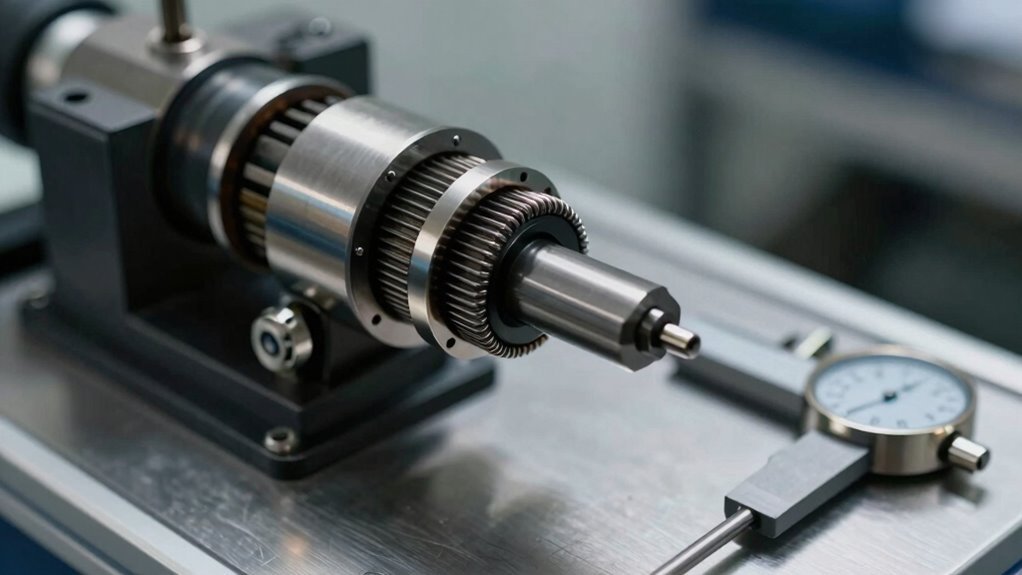
The dyno tuning process involves loosening the injection pump to achieve post-TDC retard, cutting lag and smoke while verifying timing accuracy with precision gauges at TDC.
Certified dynamometer professionals leverage continuous learning resources to stay current with advanced timing optimisation techniques and emerging diesel tuning methodologies.
Pilot Quantity Optimisation Techniques
Refining main injection timing addresses turbo lag at low RPM, yet the combustion process extends beyond a single fuel event.
Pilot injection quantity enhancement represents the next critical frontier in fuel optimisation for diesel engines.
Research demonstrates that a pilot quantity of 11.5% of total fuel amount paired with main injection delivers peak performance and emissions control.
Larger pilot injections strengthen the cold flame effect, decreasing ignition delay and accelerating fuel evaporation rates. This shortened mixture formation time enables faster, more controlled combustion initiation.
Pre-injected fuel quantities between 2% and 5% of overall injected mass create the foundation for this strategy.
Multi-objective optimisation constrains HC and CO emissions to no more than 10%, ensuring compliance with modern environmental standards while maximising torque response during critical low-RPM acceleration phases.
Test Your Anti-Lag Tune on the Dynamometer
Testing the anti-lag tune on a dynamometer reveals whether pressure delivery meets target specifications, typically 2-3 bar off-throttle, and confirms the turbo responds consistently across throttle shifts.
The dyno’s real-time data acquisition measures throttle response consistency, identifying any lag spikes or pressure irregularities that tuning adjustments may have missed.
Post-tune performance data validation compares actual results against baseline readings, ensuring the anti-lag modifications deliver measurable improvements in low-RPM torque and spool characteristics before road testing.
Custom dyno solutions enable tailored software integration that aligns with your specific anti-lag testing requirements and performance expectations.
Baseline Boost Delivery Verification
Establishing accurate baseline improvement delivery on a dynamometer requires methodical preparation and precise measurement protocols. Before validating anti-lag modifications, technicians must confirm the turbo system operates within factory specifications under controlled conditions.
Pre-Test Enhancement Checks
Engineers perform full-throttle runs from idle to redline, plotting enhancement curves to establish baseline enhancement consistency. This foundational data reveals how the turbocharger responds across the RPM range without aftermarket intervention.
Load dynos effectively duplicate real-world inertial resistance, ensuring accurate enhancement replication during testing. Our expert calibration techniques ensure your baseline measurements provide the precision needed for reliable performance data.
Baseline Power Assessment
Constant-speed full-load testing becomes the standard for measuring power curves. Enhancement pressure monitoring throughout these runs verifies baseline integrity, identifying any anomalies before anti-lag tuning begins.
Multiple RPM points tested confirm consistent enhancement buildup, establishing the reference point necessary for meaningful performance comparisons.
Throttle Response Consistency Measurement
Once baseline improvement delivery has been verified, the focus shifts to measuring how consistently the throttle responds across repeated dyno pulls—a critical validation step that separates effective anti-lag tuning from marginal adjustments.
Precision measurement begins with real-time throttle position monitoring, capturing opening changes during each sweep. Torque measurement via strain gauges or torque arms provides quantifiable data across multiple pulls at consistent rates. Data loggers simultaneously record RPM, pressure increase, and engine parameters, enabling side-by-side comparisons of successive runs.
Professional tuners repeat power-match pulls to verify tune repeatability, identifying inconsistencies that affect drivability. This methodical approach guarantees anti-lag adjustments deliver smooth, predictable acceleration rather than erratic power delivery. Regular software updates ensure your dynamometer maintains peak accuracy and reliability throughout the validation process.
Hyper Power’s Hyperwin4 software analyses real-time data, revealing throttle response advancements with clinical accuracy.
Post-Tune Performance Data Validation
After confirming that throttle response remains consistent across multiple dyno pulls, the next phase requires systematic validation of the anti-lag tune‘s real-world performance characteristics.
Capturing Critical Performance Metrics
Post-tune analysis demands careful documentation of boost pressure, air-fuel ratio, and exhaust gas temperatures during controlled dyno sessions. Engineers record torque peaks and power delivery smoothness, establishing baseline data that confirms the tune’s effectiveness.
These performance metrics serve as the foundation for comprehending how injection timing retards and rail pressure adjustments translate to tangible gains. To optimise your testing setup, consider implementing quality accessories and parts specifically designed for your dynamometer model to ensure precise measurement accuracy.
Verification Through Data Logging****
Real-time data capture using advanced software platforms enables technicians to compare pre- and post-tune snapshots.
Monitoring boost consistency at 2-3 bar off-throttle validates anti-lag effectiveness, while AFR tracking prevents lean conditions. This systematic approach guarantees modifications deliver measurable improvements aligned with performance objectives.
Upgrade Hardware for Faster Spooling
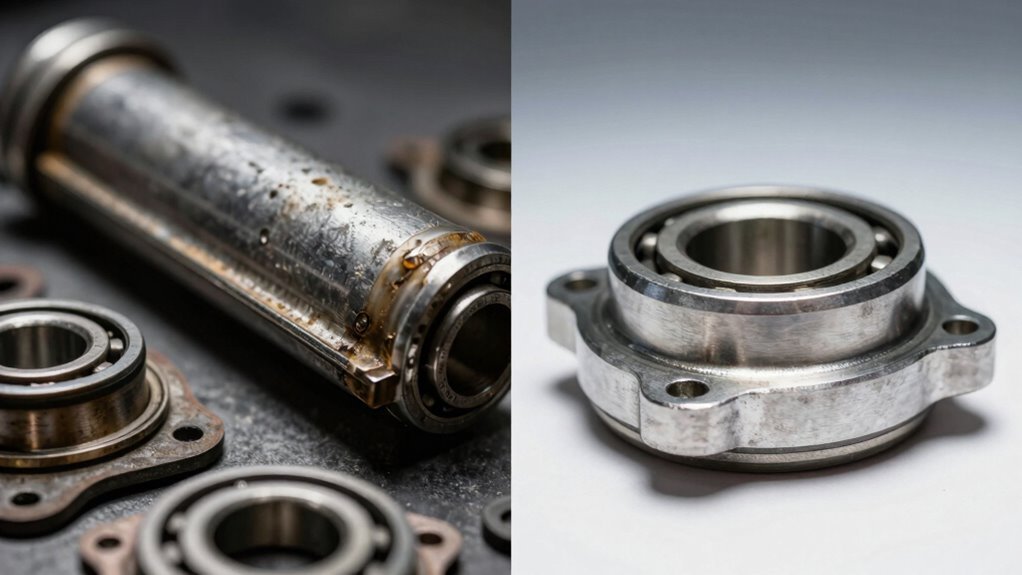
The most direct path to eliminating lag involves upgrading the turbocharger itself, since the compressor wheel and bearing system fundamentally determine how quickly pressure builds.
Ball-bearing and billet wheel upgrades deliver immediate spool with superior torque response, reducing friction that slows acceleration. Variable Geometry Turbo systems feature adjustable vanes for real-time modification, maintaining efficient power enhancement control across wider RPM ranges.
Hardware compatibility requires careful matching with engine displacement and existing fuel systems.
Upgrade costs vary considerably depending on component selection, though supporting hardware like high-flow exhaust, upgraded intercoolers, and ECU tuning maximise spool improvements.
Professional installation guarantees proper calibration, allowing operators to validate performance gains on Hyper Power’s advanced chassis dynamometers, confirming lag reduction and power delivery optimisation.
Confirm Boost Hold and Throttle Response
While upgrading supercharger hardware addresses the mechanical foundation of spool performance, validating that these improvements translate into real-world throttle response requires systematic diagnostic testing.
Dyno testing in fourth gear at 2000 RPM provides concrete data on pressure climb onset and throttle mapping effectiveness. Operators log throttle input versus delivery, quantifying lag reduction and confirming narrow powerband stability near peak turbo range.
Post-repair validation confirms consistent hold during sustained diesel dyno pulls, eliminating guesswork from performance claims.
Technicians monitor VagCom code 17964 for charge pressure control faults, identifying whether internal wear remains problematic. Frequent repairs signal replacement necessity rather than continued diagnostic cycles.
This verification process bridges hardware upgrades with measurable results, guaranteeing clients achieve the throttle response gains their investment promised.
Next Steps: Keeping Your Lag Fix Stable Long-Term
Once turbo lag improvements have been achieved through hardware upgrades and dyno validation, maintaining that performance gain requires a disciplined approach to preventive maintenance and operational habits.
The foundation of stability rests on consistent fuel quality and maintenance habits:
- Use high-cetane fuel exclusively, as lower-grade options degrade combustion efficiency and invite carbon buildup.
- Follow oil change intervals religiously, preventing turbo bearing wear and sludge accumulation.
- Replace air filters on schedule to maintain unrestricted airflow and consistent pressure response.
- Perform boost leak inspections quarterly, addressing any cracks before performance degrades.
Drivers should maintain moderate throttle inputs and shifting strategies that keep engine RPM in the efficient range.
Periodic Italian tune-ups every one to two weeks clear accumulated soot from the EGR, turbo, and DPF.
This disciplined approach guarantees dyno-validated gains persist long-term, protecting the investment and providing reliable performance.