Meta Description:
Most drivers obsess over horsepower, but they’re measuring the wrong thing. Torque is what actually moves your vehicle off the line, hauls heavy loads, and determines real-world performance—yet it remains mysteriously overlooked. Discover the mathematical formula that reveals why your engine’s true power lies in a metric almost nobody talks about.
Torque vs. Horsepower: Understanding the Fundamental Difference
Two terms dominate automotive performance conversations: torque and horsepower. These metrics measure distinct mechanical properties, though many confuse them.
Torque represents the rotating force produced by an engine’s crankshaft, quantified in pound-feet or Newton-metres. It reflects the engine’s capacity to perform work, calculated by multiplying force by lever length.
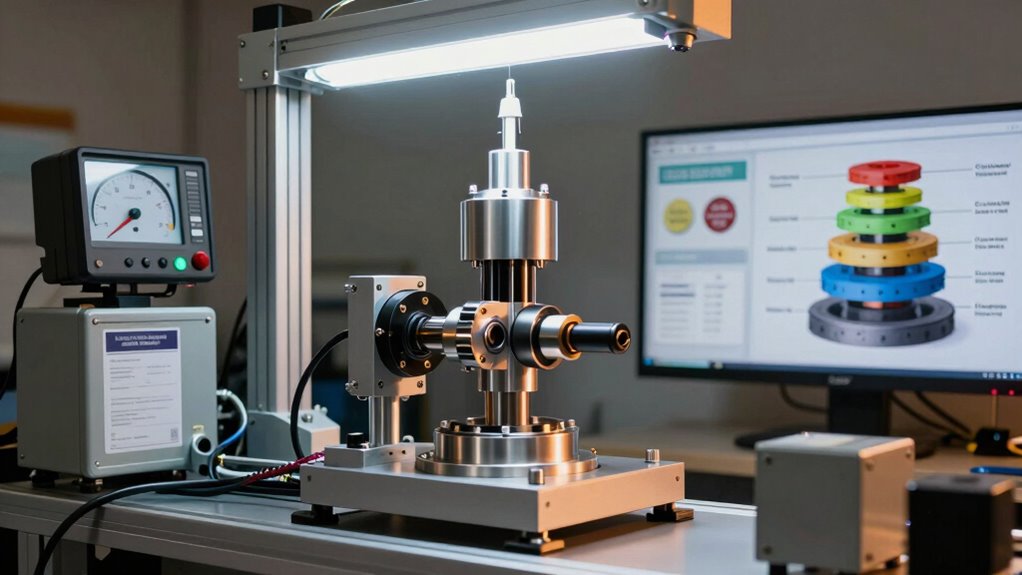
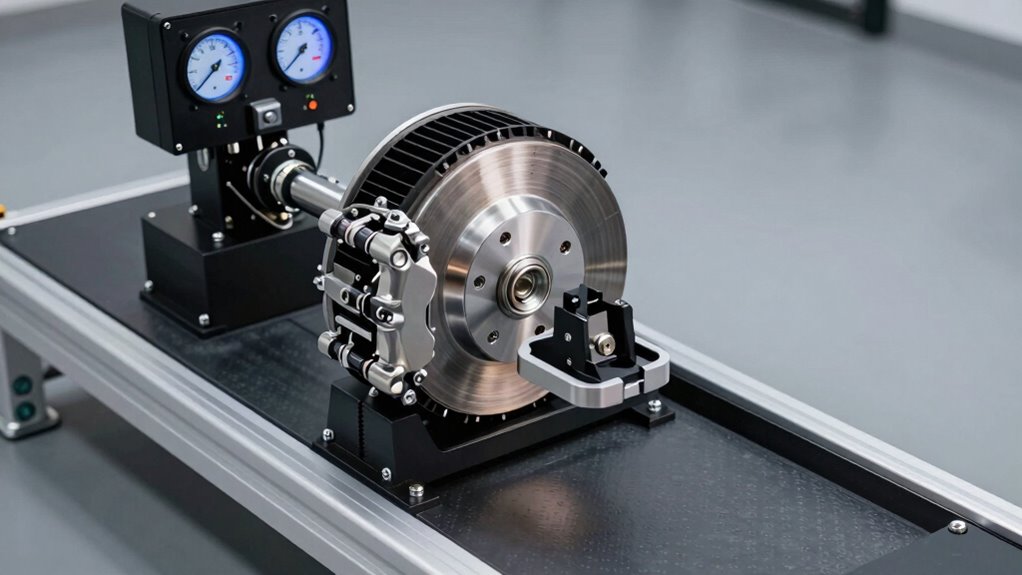
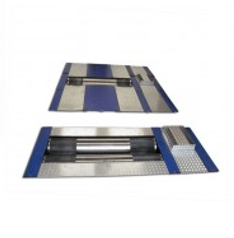
Horsepower, conversely, measures the rate at which work occurs, determining speed of energy transfer. Our dynamometer systems provide precise measurements of both metrics to ensure accurate performance testing.
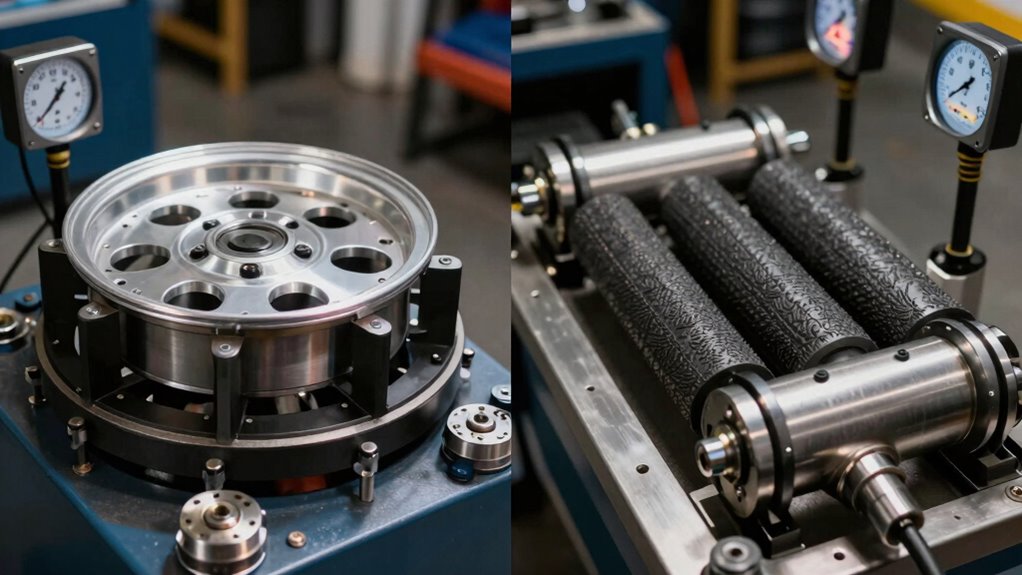
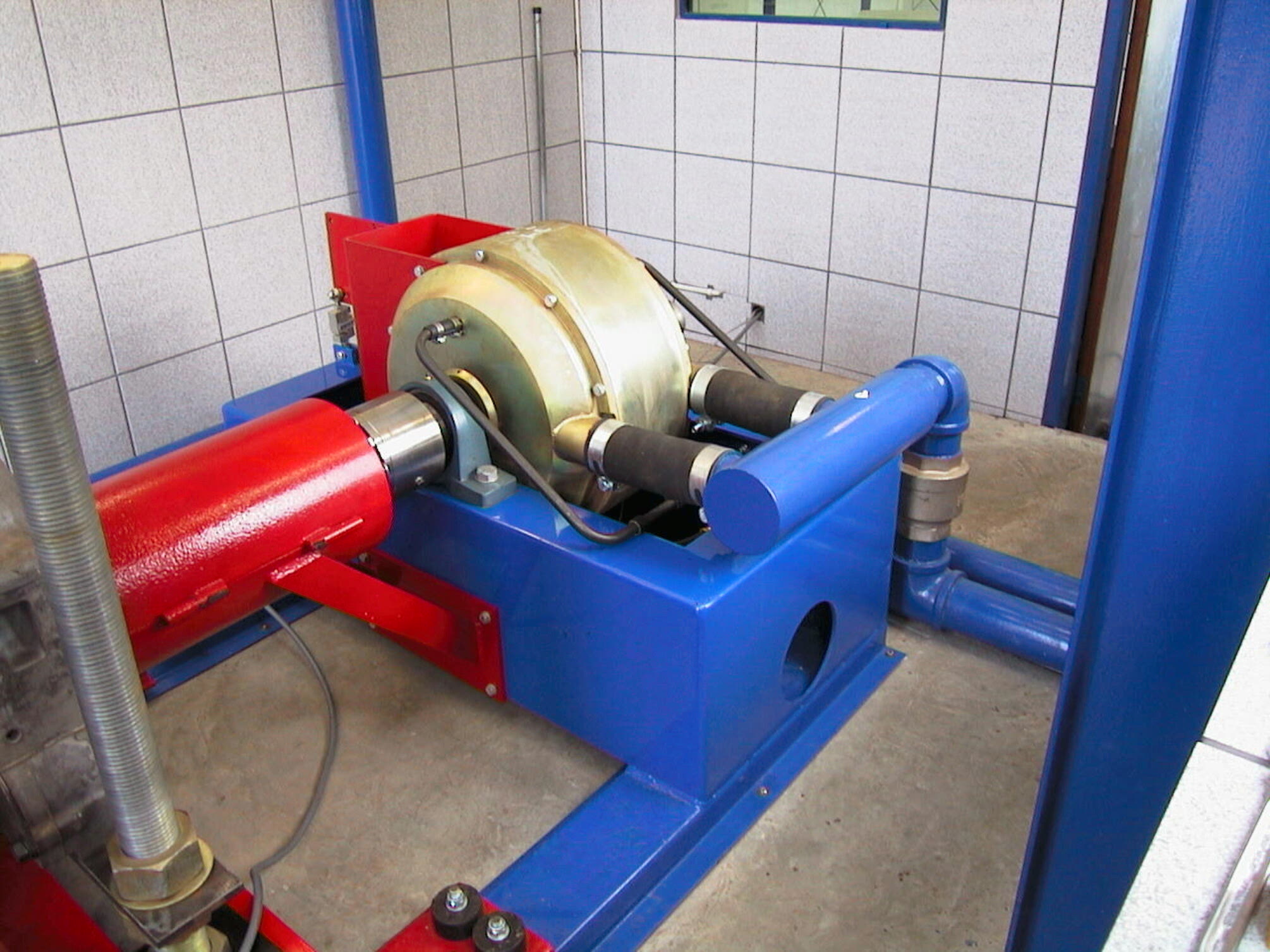
The fundamental difference lies in physics. Torque acts independently of speed, generating work potential through force applied at a radius. Horsepower incorporates time or angular velocity, rating how quickly that work applies. Engine dynamometers use magnetic fields or pump vanes to measure these performance characteristics accurately.
Comprehending torque applications reveals why heavy vehicles prioritise this metric for low-speed acceleration and towing. Horsepower efficiency becomes critical for sustained high-speed performance and racing applications, where power delivery speed matters most.
At its core, horsepower calculation relies on a straightforward mathematical relationship between torque, engine speed, and a critical constant that bridges these measurements.
The 5252 constant serves as the conversion factor that alters the raw torque and RPM data collected by dynamometers into the horsepower figures that define vehicle performance. Our state-of-the-art testing facilities ensure that the data collected during dynamometer testing is precise and reliable for accurate horsepower calculations.
Comprehending how RPM directly influences horsepower output reveals why two engines can produce identical torque yet deliver vastly different power characteristics across their operating ranges. The formula Horsepower equals Torque multiplied by Speed demonstrates that even engines with the same rotational force will generate different power outputs depending on the speed at which that torque is applied.
The 5252 Constant Explained
One fundamental equation connects torque and horsepower in every internal combustion engine: HP = (Torque × RPM) / 5252. This constant represents the 5252 significance in power measurement, deriving from the definition that one horsepower equals 33,000 foot-pounds per minute.
The mathematical foundation breaks down as follows:
- 33,000 ft-lb/min defines one horsepower’s work output per minute
- 6.2832 radians represent one complete engine revolution
- Division result yields 5252, the universal conversion constant
- Unit alignment guarantees torque in lb-ft and RPM produce accurate horsepower calculations
At exactly 5252 RPM, horsepower numerically equals torque. Below this threshold, torque dominates; above it, horsepower takes precedence. Understanding this relationship helps engineers evaluate torque against BMEP values to assess target power curves for specific applications. Precision testing services ensure that measurements meet industry standards for accurate performance validation.
Dynamometer operators at Hyper Power comprehend this crossing point, recognising it as the critical intersection where power measurement shifts between these two fundamental forces.
RPM’s Direct Impact Analysis
The relationship between RPM and horsepower follows a straightforward mathematical principle: as engine speed increases, power output rises proportionally when torque remains constant. RPM variations directly multiply torque values in horsepower calculations, converting static measurements into energetic power figures.
Peak Power at Specific Speeds
Maximum horsepower doesn’t occur uniformly across the engine’s operating range. The Dodge Challenger Hellcat exemplifies this principle, producing 707 horsepower exclusively at 6000 RPM, while providing peak torque of 650 pound-feet at 4000 RPM.
This separation between torque distribution and horsepower peaks reflects engine design optimisation. The horsepower formula incorporates both torque and RPM, which determines the final power output value. Advanced diagnostics and performance analysis tools provide real-time performance evaluations that reveal these critical power delivery characteristics across different engine speeds.
Practical Application
Understanding RPM variations enables precise performance claims and accurate diagnostics. Lower RPM operation generates substantially reduced horsepower despite available torque, demonstrating why engine speed proves critical for meaningful power calculations using the conversion formula.
Where RPM Fits in Horsepower Calculations
RPM serves as the critical multiplier in horsepower calculations, directly determining how much power an engine produces from its torque output.
The relationship between these three variables—torque, RPM, and horsepower—follows the fundamental formula where power increases proportionally with rotational speed, meaning the same torque value generates vastly different horsepower at different engine speeds. The constant 5252 is derived from the conversion of 33,000 foot-pounds per minute divided by 2π radians per revolution.
Comprehending this interaction is essential for recognising why a 5,252 RPM threshold represents a unique equilibrium point where torque and horsepower values numerically converge.
RPM’s Direct Impact On Power
Acceleration and top-end performance hinge on comprehending how engine speed directly multiplies available power output. The relationship between RPM and horsepower follows the fundamental equation: HP = (Torque × RPM) / 5252. This constant demonstrates that RPM functions as a direct multiplier, meaning higher engine speeds amplify power even when torque remains static.
- Higher RPM compensates for lower torque to achieve identical power outputs
- Parasitic losses rise exponentially with RPM squared, reducing net efficiency
- Engine design and RPM limitations determine sustainable power delivery
- Measured torque at specific RPM determines calculated power precisely
Understanding these interactions enables professionals to enhance performance within their engine’s design parameters. Hyper Power’s dynamometer systems measure exact RPM and torque relationships, revealing how your specific engine converts mechanical energy into usable power across its entire operating range. Custom software solutions ensure that testing results align precisely with your vehicle’s unique specifications and performance characteristics.
The 5,252 RPM Equivalence Point
Grasping how RPM multiplies torque into horsepower requires examining a specific mathematical landmark that defines the relationship between these two measurements. At 5,252 RPM, torque and horsepower numerically converge—a significance of 5252 rooted in the imperial formula where 33,000 foot-pounds per minute equals one horsepower.
Below this torque crossover point, torque values exceed horsepower numerically. Above it, horsepower dominates. This intersection represents no physical engine limitation, but rather a mathematical artefact of unit conversion. Comprehending this equivalence point helps professionals interpret dynamometer data accurately.
Hyper Power’s Hyperwin4 software automatically calculates these relationships, enabling technicians to identify ideal operating ranges. Proactive system monitoring provided by Hyper Power ensures that performance data is continuously analysed for optimal results.
Whether analysing chassis dynamometer results or engine performance curves, recognising where torque and horsepower intersect provides critical revelations into vehicle efficiency and performance characteristics across varying RPM ranges.
How to Calculate Horsepower When You Know Torque
Grasping the relationship between torque and horsepower is essential for anyone working with vehicle performance, whether tuning an engine or analysing dynamometer data.
The primary formula, HP = (Torque in lb-ft × RPM) / 5252, forms the foundation for accurate calculations across the automotive industry.
Calculation Steps
- Measure torque output in pound-feet using a dynamometer
- Record the engine RPM at which peak torque occurs
- Multiply torque value by RPM, then divide by 5252
- Account for torque variation across the power band to dispel horsepower myths
This method alters raw torque measurements into meaningful horsepower figures, enabling professionals to evaluate engine efficiency accurately. Investing in professional installation and calibration of your dynamometer ensures the precision necessary for reliable torque measurements and subsequent horsepower calculations.
Comprehending this relationship eliminates confusion between these distinct performance metrics and supports informed tuning decisions.
How to Calculate Torque When You Know Horsepower
Sometimes the calculation process runs in reverse—professionals need to determine torque output when horsepower figures are already known. The standard formula rearranges simply: Torque (lb-ft) = Horsepower × 5,252 ÷ RPM.
This method proves essential when analysing engine performance data from dynamometer testing. Engineers input the known horsepower value and the specific RPM at which that power was measured, then divide by the constant 5,252 to obtain torque measurements in pound-feet.
Understanding horsepower variations across different engine speeds requires this reverse calculation. A 468 cubic-inch engine producing 527 horsepower at 5,800 RPM, for example, generates approximately 475 lb-ft of torque using this formula.
This approach guarantees consistent results across various engine types and displacements, supporting precise performance analysis.
Why Horsepower Equals Torque at 5,252 RPM
The intersection of horsepower and torque at 5,252 RPM represents a mathematical pivot point rather than a coincidence, rooted in the fundamental definitions of power and the historical standard James Watt established for measuring engine output.
This critical torque benchmark emerges directly from the horsepower formula’s derivation, where 33,000 foot-pounds per minute—Watt’s original standard—divides by 2π, the rotational factor in angular velocity. The resulting constant, 5,252, creates a unique equilibrium point in engine specifications.
Key aspects of this mathematical relationship:
- Below 5,252 RPM, torque values exceed horsepower values.
- Above 5,252 RPM, horsepower values exceed torque values.
- The RPM term cancels when engine speed reaches exactly 5,252.
- This intersection point remains consistent across all engine types.
Understanding this relationship helps professionals interpret performance data accurately and compare diverse powerplant characteristics with confidence.
How Different Engines Use Torque and RPM Differently
While the 5,252 RPM intersection point provides a mathematical structure for grasping horsepower and torque relationships, real-world engine characteristics demand different RPM strategies.
Street-focused engines concentrate peak torque delivery at lower RPM values, creating responsive acceleration during everyday driving. Track-oriented engines shift torque peaks higher, sacrificing immediate responsiveness for sustained high-speed power management.
Street engines prioritise low-RPM torque for responsive everyday driving, while track engines shift peaks higher for sustained high-speed power.
High-performance engines maintain adequate torque at extreme RPM levels, extending horsepower production windows through disciplined engineering. Formula 1 engines exemplify this philosophy, producing modest peak figures while generating enormous power through tireless RPM sustainability.
Engine builders enhance torque curves strategically—broad distributions provide versatile performance across varied conditions, while narrow peaks maximise output at specific operating points.
Comprehending these engine characteristics reveals how manufacturers align RPM strategies with intended vehicle purpose and driver expectations.
Calculation Examples: Common Engine Types
Comprehending how different engine designs translate torque and RPM into horsepower requires examining real-world examples across distinct powerplant categories.
Each engine type demonstrates unique torque curves and performance characteristics that reveal how mechanical engineering shapes output.
- Inline-4 Engines: Naturally aspirated models produce 250–350 HP at 6,000 RPM, with peak torque of 200–300 lb-ft at 3,000–4,500 RPM; supercharged versions sustain 300–400 lb-ft across 2,000–5,000 RPM for responsive acceleration.
- V8 Engines: Performance models deliver 650 lb-ft at 4,000 RPM, yielding 742 HP when calculated at 6,000 RPM using the standard formula.
- Diesel Engines: High torque reaches 800–1,000 lb-ft at 1,500–2,500 RPM, generating moderate 400–500 HP for towing applications.
- Racing Engines: Modest torque sustained to 10,000+ RPM produces 800–1,000 HP, demonstrating how enhanced RPM maximises power output.
Once theoretical calculations establish expected horsepower and torque values, dynamometers provide the critical bridge between engineering predictions and measurable reality. These precision instruments capture actual performance data through torque and speed sensors, translating raw electrical signals into verified power curves.
Dynamometer calibration guarantees measurement accuracy, performed monthly or verified weekly per industry regulations. Post-testing runs validate real-world performance gains, comparing actual dyno results against initial calculations. When intake upgrades or engine modifications occur, the dynamometer confirms whether theoretical improvements materialise as intended.
Performance verification through steady-state testing imposes fixed speed and torque points along the complete power curve. Data logging at appropriate rates—500Hz minimum for torque-speed curves—generates repeatable, scientifically valid measurements. Regular software updates enhance dynamometer reliability and expand capabilities for evolving testing requirements.
This thorough validation process converts theoretical engineering into documented, actionable performance intelligence, enabling technicians to make informed tuning decisions with confidence.
Optimising Torque and RPM for Your Specific Application
The relationship between torque delivery and engine RPM fundamentally shapes how a vehicle performs in its intended role, whether that involves hauling heavy loads at low speeds or sustaining power across high-RPM ranges.
Low-RPM torque applications, common in diesel trucks and off-road equipment, prioritise strong pulling power from idle to mid-range speeds, while high-RPM performance strategies focus on maintaining horsepower output as engine speeds climb, requiring different calibration approaches.
Comprehending these distinct optimisation paths allows engineers and operators to match engine characteristics precisely to real-world demands, ensuring both efficiency and reliability.
Low-RPM Torque Applications
While horsepower captures attention in performance discussions, low-RPM torque often proves more critical for real-world applications where heavy loads must be moved at controlled speeds.
Torque optimisation at low speeds delivers substantial advantages across industrial and agricultural sectors. Series-wound motors achieve high torque at standstill with minimal current draw, making them ideal for demanding low-speed applications.
Brushless DC motors provide approximately 85% efficiency, reducing operational costs while maintaining precision control.
Key considerations for low-RPM torque applications include:
- Agricultural tractors require average torque exceeding 100 Nm for lifting and motion control.
- Industrial mixing processes benefit from constant torque delivery regardless of speed variations.
- Centrifugal pumps demand variable torque loads that scale exponentially with operational speed.
- Holding torque at low speeds consumes power proportional to torque multiplied by speed.
Understanding these factors enables professionals to select appropriate equipment for maximum efficiency. Certification in dynamometer technology ensures operators can accurately measure and validate torque performance across these diverse applications.
Moving beyond the controlled, predictable world of low-RPM torque, high-RPM performance demands a fundamentally different engineering approach. Advanced high RPM tuning strategies utilise variable valve timing and lightweight titanium components to safely extend engine limits beyond 8,000 RPM, maximising power delivery across critical acceleration zones.
Performance Strategies for Peak Power
Effective performance strategies employ ECU remaps that progressively advance ignition timing to 40 degrees BTDC, coupled with anti-lag turbo systems maintaining pressure during high-RPM pulls.
Electric motor integration provides instant torque fill-up, complementing peak power output. Gear ratio optimisation keeps engines in their power band, while fly-by-wire throttles enable precise air-fuel mapping at redline. Precision testing through dynamometer integration ensures that tuning modifications are validated and optimised for real-world performance gains.
Professionals tuning for track applications prioritise 7,000-10,000 RPM peaks, achieving 150+ horsepower per litre through sophisticated data logging and knock analysis enhancement.