Meta Description:
Most outboard engine builders skip dyno testing—and pay the price at launch. Water testing reveals nothing about the mechanical gremlins hiding inside your build until it’s too late. Dyno testing exposes horsepower losses, torque inconsistencies, and air-fuel problems before they become expensive failures. Learn the exact procedures that separate thriving engine builds from catastrophic mistakes.
Why Dyno Testing Matters for Outboard Engines
Because outboard engines operate in demanding marine environments, comprehending their true performance characteristics becomes essential before utilising them on the water.
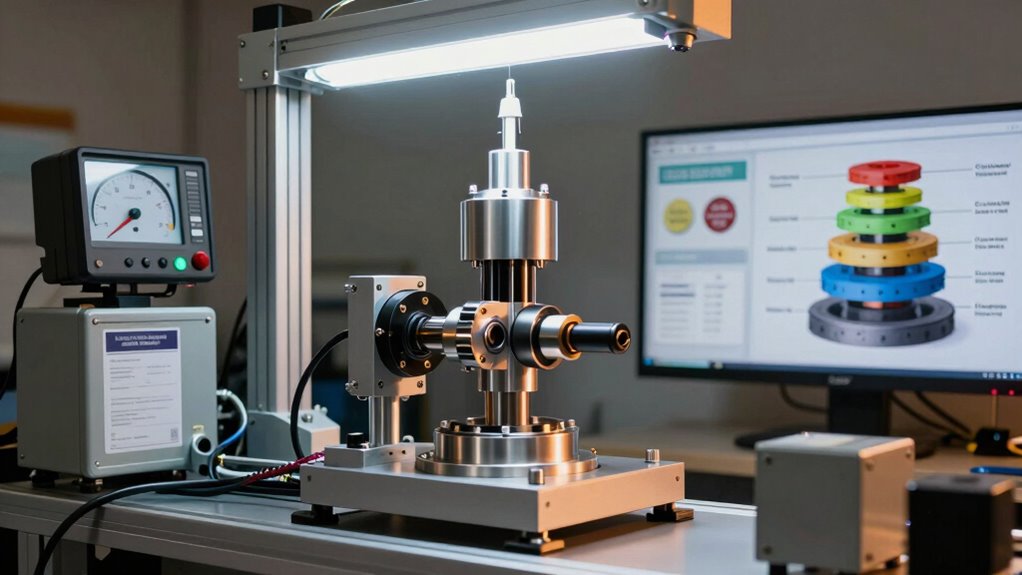
Dyno testing provides performance validation that confirms whether an engine’s output matches manufacturer specifications. Rather than relying on theoretical data, operators gain precise measurements of horsepower, torque, and efficiency under controlled conditions. Each tune undergoes hundreds of hours of engine dyno testing to identify engine weaknesses and ensure safe power enhancements.
Dyno testing confirms engine output against manufacturer specifications through precise horsepower and torque measurements in controlled conditions.
This dyno benefits approach identifies inconsistencies like throttle sputtering or irregular speed changes that may remain hidden during casual operation. Our state-of-the-art testing facilities enable comprehensive data collection and in-depth analysis to detect performance issues before they impact your vessel.
The testing environment eliminates unpredictable variables inherent to on-water trials, allowing technicians to evaluate performance safely and repeatably.
Choosing Between Hydraulic and Load Cell Dynos for Outboards
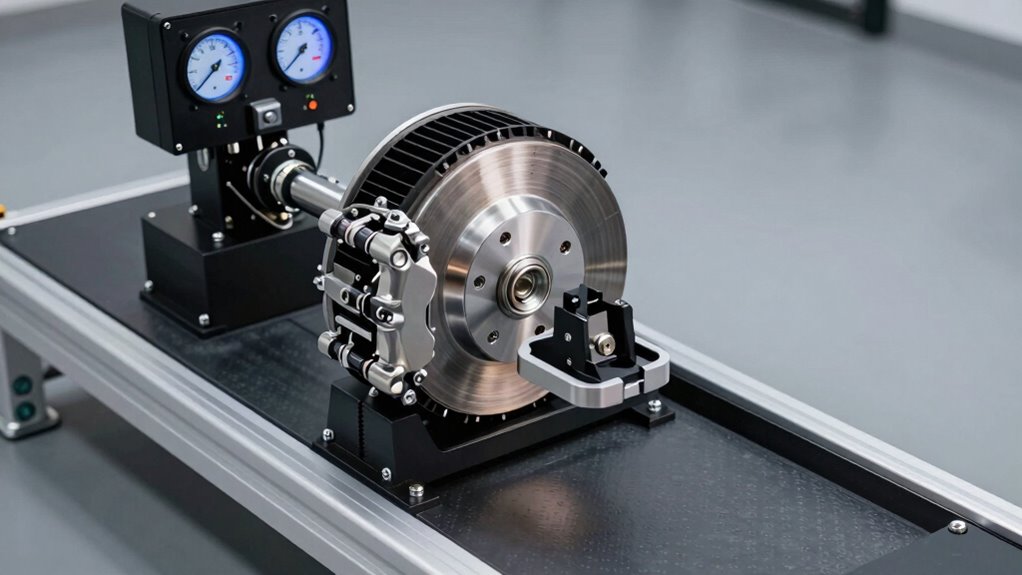
Two primary dynamometer technologies dominate marine engine testing: hydraulic systems and load cell-based electric dynos, each offering distinct advantages and limitations for outboard engine evaluation.
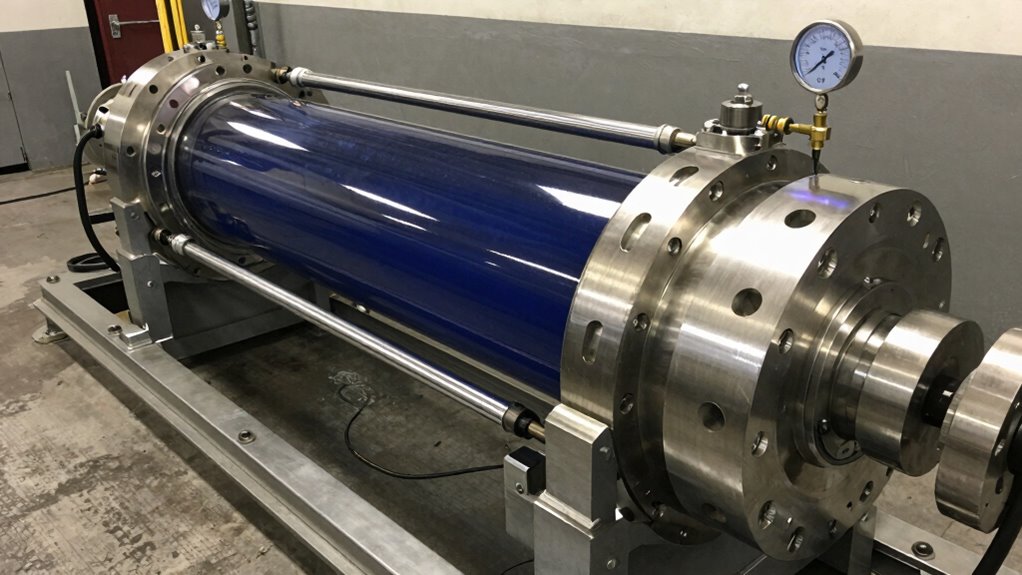
Hydraulic advantages include excellent stability for high-power outboards and efficient operation in demanding marine environments. Water brake systems handle the responsive range necessary for thorough outboard testing, managing both RPM and torque variations effectively. Hyper Power International’s commitment to continuous innovation ensures that hydraulic systems remain optimised for the most demanding marine applications.
However, hydraulic systems require substantial cooling infrastructure and incur ongoing maintenance costs from pump wear and fluid degradation. Pressure sensors can be integrated as an alternative measurement method to supplement traditional load cell readings for enhanced data collection.
Load cell precision delivers superior accuracy, measuring actual torque directly through Wheatstone bridge technology at ±0.2% full scale. Electric dynamometers provide millisecond response times and energy efficiency, recycling over 80% of consumed power. Wheatstone bridge sensors offer the most reliable torque measurements available for marine engine applications.
For comparative performance analysis, load cell-based systems offer the absolute torque measurement accuracy that serious outboard development demands.
Preparing Your Outboard: Mounting and Calibration Basics
Before an outboard engine can deliver reliable dyno data, it must be mechanically prepared and properly integrated into the test stand’s structure. The pre-dyno checklist guarantees every component matches final installation specifications, including fuel systems, ignition equipment, and cooling provisions. Proper engine setup requires securing the motor to the test stand’s structure while integrating fuel delivery, exhaust evacuation, and fresh air systems. Establishing specific goals for the dyno session helps determine which components and equipment need to be prepared and transported to the facility. Our expert calibration techniques ensure your outboard achieves optimal performance measurements from the moment testing begins.
| Setup Component |
Purpose |
Critical Function |
| Mounting structure |
Engine stabilisation |
Prevents vibration interference |
| Fuel system integration |
Consistent delivery |
Enables accurate calibration |
| Cooling provisions |
Temperature management |
Protects engine during testing |
| Exhaust evacuation |
Safety compliance |
Removes harmful fumes |
| 12-volt power supply |
Electronics operation |
Powers starter and ignition |
Conservative calibration begins with rich fuel mixtures, gradually leaning towards ideal torque values while monitoring spark knock throughout load increases.
Common Mistakes That Tank Your Dyno Numbers
Even with proper engine mounting and calibration procedures in place, operators frequently introduce errors during testing that compromise data integrity and produce unreliable results.
Temperature Control Failures
Oil and water temperatures must remain within a 2-degree tolerance before each pull. Discharge water temperatures exceeding 175°F cause impurities to accumulate on dyno rotors and stators, reducing load capacity. Fresh water intake should be distanced from contaminants to prevent buildup that affects engine performance during testing.
Oil and water temperatures must stay within 2-degree tolerance to prevent discharge temperatures exceeding 175°F, which reduces dyno load capacity.
Inaccurate temperature calibration, where probes display incorrect readings, undermines repeatability across multiple tests. Our cutting-edge software solutions automatically compensate for thermal drift to maintain consistent baseline conditions.
Acceleration Rate Inconsistencies
Varying acceleration rates between pulls—such as 200 rpm/sec versus 500 rpm/sec—skew power measurements considerably.
Dyno setup modes must match precisely; hold versus ramp protocols produce different results. Standardised acceleration guarantees accurate comparisons for tuning decisions.
Setup and Load Variables
Tyre pressures, strapping methods, and exhaust configurations affect measured power.
Operators must account for drivetrain losses and tyre-roller interface drag to obtain reliable engine output data.
Running Your First Dyno Pull: Step-by-Step
Executing a successful dyno pull requires methodical preparation, precise calibration, and disciplined execution. Comprehending proper dyno pull techniques separates reliable data from misleading results, ensuring your engine performance factors are accurately measured.
The process unfolds in critical stages:
- Accelerate smoothly at 600 rpm per second for controlled sweep progression.
- Carry out the pull from 3000 to 6000 rpm in approximately 5 seconds.
- Measure torque, horsepower, and RPM continuously throughout the test.
- Monitor air-fuel ratio and pressure enhancement for real-time load simulation. Use wideband O2 meters to capture accurate AFR readings during each pull for optimal tuning data.
After completion, review torque and horsepower data immediately. Note any deviations from expected results, then adjust fuel and spark curves based on instant feedback. Real-time performance evaluations enhance the reliability of your adjustment decisions.
This repetitive approach validates mechanical integrity while building confidence in your testing methodology.
Reading Your Results: What Horsepower, Torque, and RPM Actually Mean
Comprehending dyno results requires interpreting three interconnected measurements: horsepower reveals your engine’s total work capacity over time, torque indicates the rotational force available for acceleration and propeller engagement, and RPM defines the engine speed range where peak performance occurs.
For marine applications specifically, horsepower accuracy depends on atmospheric corrections applied to raw dyno readings, while torque characteristics directly influence how effectively your outboard converts power into thrust through the propeller.
Real-world RPM implications matter considerably, as the usable powerband width determines whether your engine delivers responsive low-end acceleration for heavy loads or peaks only at high speeds where marine efficiency typically diminishes.
Custom dyno systems with tailored software solutions can be configured to accurately simulate the specific operational conditions of your outboard engine, ensuring that test results reflect real-world performance characteristics relevant to your vessel’s unique requirements.
Horsepower Measurement Accuracy
When reviewing dynamometer test results for an outboard engine, the numbers displayed—horsepower, torque, and RPM—tell a specific story about how that engine performs under controlled conditions.
Comprehending these measurement standards guarantees performance validation and confidence in your engine’s actual capabilities.
Several factors influence dyno accuracy:
- Frictional losses from gears and bearings reduce power by 3-15% from crankshaft ratings.
- Water brake resistance simulates full-load conditions, mirroring real propeller demands.
- Manufacturers allow a 10% variance from rated horsepower specifications.
- Metric versus SAE ratings differ slightly, with 1 DIN hp equalling 98.6% SAE hp.
Dyno curves subtract these losses, displaying maximum power available at each RPM.
This performance validation confirms whether your engine meets rated specifications, accounting for all mechanical realities between crankshaft and propeller. Proactive system monitoring through advanced diagnostic tools can help identify any deviations from expected performance over time.
Three critical measurements—torque, horsepower, and RPM—work together to define how an outboard engine actually performs on the water, and interpreting their relationship is essential for proper thrust matching and engine health.
Torque enhancement begins with grasping that peak torque typically occurs at lower RPM levels, where engines deliver maximum pulling force for acceleration and load handling.
Propeller selection directly determines whether an engine reaches its rated performance curve. An incorrectly matched propeller overloads the engine at low RPM, preventing it from achieving rated speeds and risking mechanical damage.
Dyno testing isolates propeller performance variables, revealing exactly how prop choice affects torque delivery and horsepower output across the RPM range.
The propeller curve intersects the engine power curve at maximum output, establishing ideal operating parameters for reliability and efficiency.
Regular software updates optimise dynamometer accuracy and ensure your testing equipment delivers reliable performance data for precise propeller matching and engine diagnostics.
Real-World RPM Implications
The gap between dyno numbers and actual water performance reveals itself most clearly at the RPM where an outboard engine operates under real load. Comprehending these practical implications separates theoretical peak power from everyday responsiveness.
Real world RPM operation differs markedly from controlled dyno testing. Key performance factors include:
- Engine speed below 2,300 RPM signals excessive propeller pitch or overload conditions.
- Shaft horsepower deducts 3-3.7% gear friction losses from brake horsepower measurements.
- Broad torque curves across RPM ranges provide superior everyday responsiveness than isolated peak numbers.
- Exhaust gas temperature monitoring flags mixture issues affecting cylinder performance.
Engine responsiveness depends on torque availability throughout the operating range, not maximum peak values. A narrow torque band reduces practical performance when accelerating from cruise speeds.
Professional dyno operators monitor knock sensors, intake air temperature, and barometric pressure to maintain real-world consistency between test results and actual boating conditions.
AFR Tuning on the Dyno vs. in the Water
Most outboard engine tuning professionals recognise a fundamental challenge: what works flawlessly on a dynamometer rarely translates directly to water conditions without adjustment.
The dyno environment offers unrestricted airflow and dry headers, enabling precise AFR targeting around 12.0. However, water-based operation introduces significant AFR discrepancies due to heightened temperatures, wet exhaust systems, and flame arrestor restrictions that lean out fuel mixtures considerably.
Tuning adjustments become necessary post-dyno testing. Boat conditions typically shift AFR into the low 11’s or 10’s range, requiring careful re-verification on water before finalising curves.
Professional technicians use exact boat components during dyno sessions to simulate real conditions more accurately, though thorough validation remains essential during actual water trials to confirm AFR stability and peak performance under sustained operating heat.
Stress Testing Your Rebuild Before Launch
Before launching a rebuilt outboard engine, stress testing on a dynamometer provides critical validation that load cell accuracy and real-world condition simulation cannot achieve through standard inspections alone.
Precision load measurement during controlled testing reveals how the engine actually performs under the thermal, mechanical, and operational stresses it will encounter on the water, identifying issues that remain hidden during bench checks.
This thorough evaluation guarantees the rebuild meets performance specifications and reliability standards before the engine leaves the dock.
Certification in dynamometer procedures ensures technicians can properly execute these critical pre-launch tests and interpret results with operational mastery to validate engine performance.
Load Cell Accuracy Testing
Because load cells form the foundation of reliable dynamometer data collection, their accuracy directly determines whether performance measurements reflect reality or introduce systematic error into every test result.
Professional technicians follow a structured approach to load cell calibration:
- Physical inspection of cables, connectors, and mounting brackets for visible damage
- Electrical resistance testing using multimeters to verify bridge completeness
- Zero balance verification against manufacturer specifications
- Output signal validation under controlled load conditions
Signal stability testing involves applying mild shock loads and observing whether readings return to baseline values. Erratic responses indicate potential strain gauge failure or electrical connection issues.
Technicians document all findings and compare results against original calibration certificates, ensuring measurements remain trustworthy throughout marine engine testing protocols.
Real-World Condition Simulation
While load cell accuracy guarantees that dynamometer readings faithfully capture what an engine is producing, those measurements only matter if the engine has been properly stress-tested under conditions that mirror real-world operation.
Real-world scenarios demand thorough operational testing before any rebuild enters service. Marine engines face unique demands—sustained high RPM runs, variable throttle shifts, and thermal cycling under load.
Professional shops use dynamometers to simulate these conditions, gradually increasing throttle positions and monitoring performance parameters across the full operating range.
This systematic approach identifies weaknesses before the engine reaches the water. Technicians observe torque delivery consistency, power stability, and thermal management under sustained load.
Many boat owners experience a significant discrepancy between the horsepower and torque figures recorded during dynamometer testing and the actual performance observed on the water, a phenomenon rooted in fundamental differences between controlled laboratory conditions and real-world marine operation.
Several critical factors account for this gap:
Environmental variables including cooling, fuel ratios, exhaust systems, and emission equipment create significant performance gaps between dyno testing and real-world marine operation.
- Engine cooling differs dramatically—dyno cells maintain ideal air quality, while boats experience high ambient temperatures exceeding 90°F with humidity and barometric pressure fluctuations.
- Fuel types and air-fuel ratios shift from 12.0 on the dyno to 10.0-11.0 in boat compartments due to heat entrapment.
- Wet exhaust systems create different backpressure than dry headers used during testing.
- Flame arrestors and emission equipment add resistance absent during baseline tuning.
These environmental variables render original dyno curves invalid for marine installation, requiring adjustment before expecting promised performance on the water.
Finding the Right Dyno Facility for Your Engine Build
Selecting the right dyno facility requires evaluating both the specialised equipment available and the technician proficiency on staff, as these factors directly influence the accuracy and reliability of your test results.
Facilities equipped with outboard-specific dynamometers—such as computerised engine dyno cells and propshaft machines calibrated for marine applications—deliver measurements that reflect real-world performance rather than generic automotive baselines.
Technicians with extensive marine testing experience, like those with 25 years of V6 Mercury validation and thousands of recorded tests, comprehend the unique demands of outboard engines and can identify performance issues that less specialised shops might overlook.
Specialised Outboard Dyno Equipment
Outboard engine testing requires specialised dynamometer equipment that differs greatly from standard automotive setups, because marine powerplants operate at higher RPM ranges, demand bi-directional shaft rotation, and must account for propeller load characteristics rather than simple chassis behaviour.
Modern outboard technology and dyno advancements have produced systems specifically engineered for these demands.
Leading equipment options include:
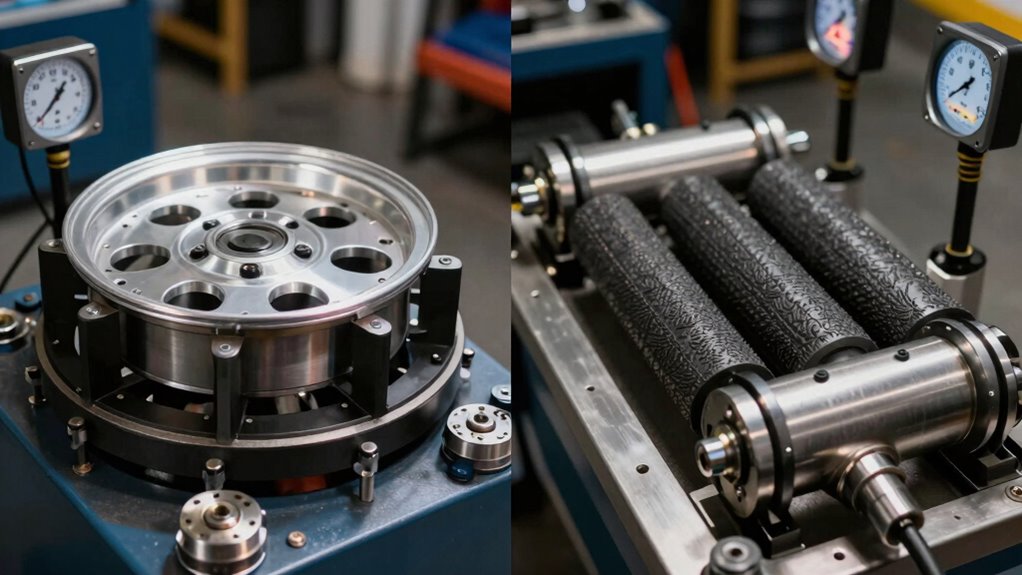
- Water brake dynamometers providing absorption via water resistance for marine applications
- Eddy current systems handling high-speed small displacement engines up to 14,000 RPM with ±0.25% torque accuracy
- Portable units like the D100 covering 10-100 HP with optional cooling for fieldwork
- Hydraulic models offering compact, sturdy solutions for marine engine loads
These systems feature strain gauge load cells, inductive pulse pickups, and stainless-steel absorbers resistant to cavitation, ensuring accurate measurements across demanding marine testing protocols.
Technician Expertise And Capabilities
Because marine engine development demands precision far beyond standard automotive work, the difference between a capable dyno facility and an exceptional one lies in the technician’s depth of specialised knowledge and hands-on experience with outboard powerplants.
Qualified technicians grasp the unique demands of marine engines operating under variable loads, humidity, and saltwater conditions. Their engine tuning proficiency guarantees peak torque and horsepower balance specific to individual boat designs.
Through thorough technician training and certification programmes, professionals develop the capability to perform systematic component testing and monitor critical outputs from external control panels.
This specialised knowledge enables accurate assessment of high-torque, low-RPM performance challenges inherent to marine propulsion systems, guaranteeing reliable validation before water trials.