Meta Description:
Roller dynos are quietly failing high-performance shops—and nobody’s talking about it. When horsepower exceeds 5,000, tyre failure becomes inevitable, transforming test runs into catastrophic disasters. Hub dynos eliminate this vulnerability entirely through direct wheel-hub mounting, but the performance community remains divided on whether this represents genuine innovation or overengineered overkill. Find out why leading shops are making the switch.
The Tyre Explosion Problem on Roller Dynos
Consider the moment a Mustang’s tyre ruptures at approximately 150 MPH during a high-speed dyno run in fifth gear, the explosive failure occurring mere feet from filming personnel and technicians.
Roller dynamometers create unique tyre safety challenges that professionals must comprehend.
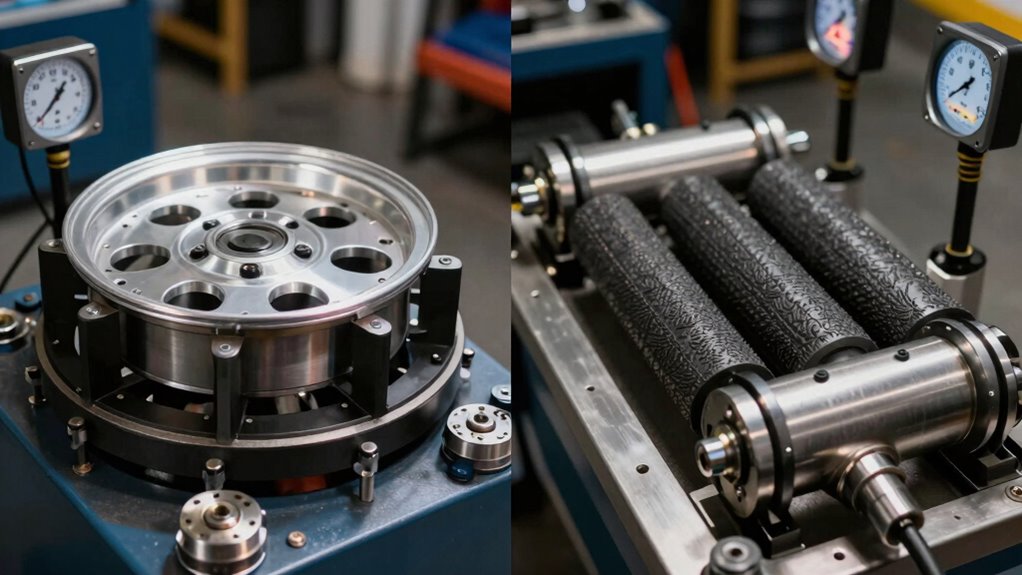
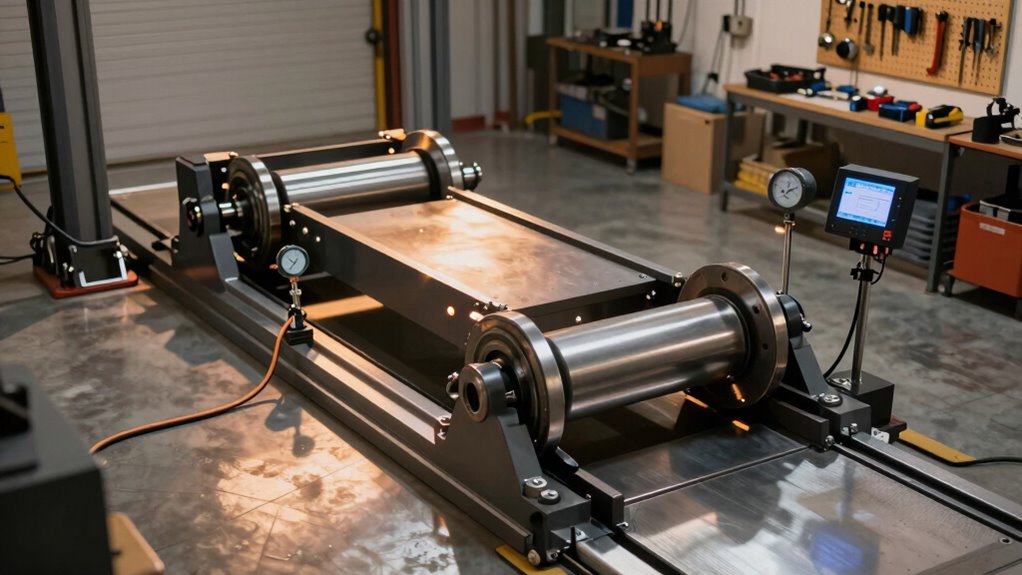
The explosion risks stem from how dyno rollers deform tyre tread under extreme load. As the tyre compresses against the drum, it experiences creep ranging from -0.4 to +2.3 inches per revolution under normal conditions, escalating to -1 to +5 inches during extreme testing. This mechanical stress, combined with high velocities, amplifies tyre failure potential considerably. The intense heat generated during high-speed runs can cause tyre material degradation, further weakening the structural integrity of the tyre and increasing rupture likelihood. Our state-of-the-art testing facilities enable precise monitoring of these conditions to better understand failure mechanisms.
Dyno rollers deform tyre tread under extreme load, causing creep escalation that amplifies failure potential at high velocities.
Industry experts recommend maintaining speeds below 200 km/h to minimise explosion risks.
Low tyre pressure, tread damage, and inadequate cooling further compromise tyre safety during high-speed runs, making roller dyno testing inherently dangerous without proper precautions and equipment selection.
Why Hub Dyno Direct Mounting Eliminates Vehicle Slip
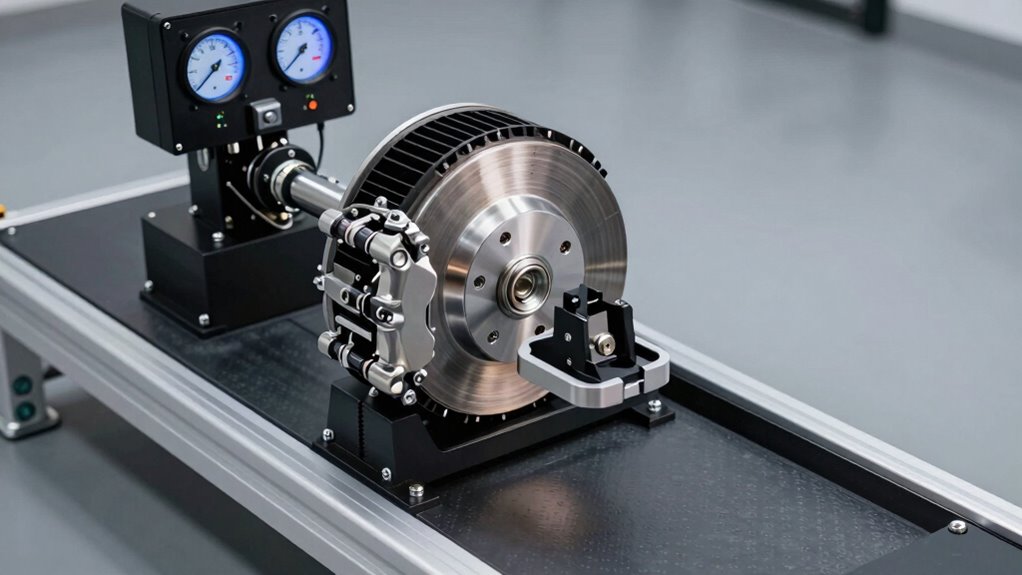
Unlike roller dynamometers that rely on tyre contact and straps to restrain vehicles during high-power testing, hub dynos employ direct bolting to wheel hubs combined with sliding pod locking mechanisms that physically secure the car in place.
This mechanical approach eliminates the variables inherent in strap-based retention systems, where improperly tensioned or worn restraints can allow unwanted vehicle movement during extreme acceleration events. Hub dyno measurements achieve superior consistency because hub bearing friction represents the only significant power loss variable, compared to the numerous tyre and environmental factors affecting roller dyno accuracy. Our cutting-edge software solutions integrate real-time monitoring to track these variables throughout the testing process.
The result is a testing environment where the car remains fixed relative to the measurement point, enabling safe and repeatable data collection even at extreme RPM levels.
Direct Hub Bolting Method
The foundation of precision dynamometer testing rests on eliminating variables that compromise data accuracy, and vehicle slip stands as one of the most consequential.
Direct bolting to the hub represents the gold standard for securing vehicles during high-horsepower testing, leveraging hub centric advantages that traditional lug-centric systems cannot match.
Direct bolting methods remove adapter layers, providing thicker material support where it matters most. Precision-engineered bolts fit specific hubs with exacting tolerances, ensuring secure fastening that prevents slippage under extreme rotational forces. These bolts undergo heat treatment processes that strengthen the fastening interface against fatigue failures common in high-cycle testing environments. Our precision testing services ensure that every fastening meets the exacting standards required for reliable performance validation.
Heat-treated bolts achieve Rockwell 58-62 hardness, resisting wear across repeated testing cycles.
This approach transfers vehicle load directly through the hub interface rather than relying on lug holes as primary load carriers.
The result: repeatable, scientifically valid data that professionals depend on for performance optimisation and safety validation.
Pod Locking Mechanisms Secure
Hub dynos eliminate vehicle slip through a fundamentally different approach than traditional roller-based systems, one that removes the very conditions where slippage occurs.
The pod security design employs fixed floor mounting, anchoring the entire testing apparatus without reliance on tyre grip or roller contact. Locking mechanisms secure the vehicle directly at the hub, creating a rigid connection that prevents any horizontal movement.
This positive attachment eliminates the traction variables that compromise chassis dyno accuracy, where tyre slip can distort power measurements by significant margins. The eddy current retarders within the hub mechanism manage magnetism levels to precisely regulate load application during testing. Our proactive system monitoring ensures the retarder mechanisms function optimally throughout extended testing sessions.
The fixed pod design prevents wheelstanding and lateral shifting, even during extreme high-horsepower pulls. Engineers and technicians benefit from this stability, as test repeatability improves dramatically.
With variations under 10 horsepower at peak loads, professionals achieve the measurement consistency necessary for reliable tuning and performance validation across diverse testing protocols.
Elimination Of Strap Variables
While traditional roller dynamometers depend on straps to restrain vehicles during high-power testing, hub-based systems eliminate this dependency entirely through direct mechanical connection to the wheel hubs.
This fundamental design difference improves strap reliability and measurement accuracy by removing variables that compromise data integrity:
- Snapped straps no longer occur from extreme power delivery or wheelies
- Strap tension and friction no longer artificially load the drivetrain
- Improper strapping techniques cannot skew horsepower readings
- Only frontal restraint becomes necessary for extreme drag racing applications
Hub-connected systems provide consistent, repeatable measurements because the connection remains predictable and controlled. Our expert calibration techniques ensure that every measurement taken on a hub dyno system reflects true performance data. The enhanced safety profile of hub dynos is particularly critical when testing vehicles exceeding 600hp per axle, where tire grip limitations on roller dynos create dangerous conditions.
The direct mounting eliminates mechanical variables that traditionally plague roller dyno testing, ensuring engineers and technicians obtain reliable baseline data for tuning decisions and performance validation.
Vehicle Stability: The Safety Edge Hub Dynos Have Over Wheel Dynos
Hub dynos achieve superior vehicle stability through direct bolting to hub adapters, which eliminates the movement and slippage inherent in wheel dyno systems.
Unlike wheel dynos that rely on straps to restrain vehicles during testing, hub dynos remove this variable entirely by securing the drivetrain at its source, ensuring consistent and repeatable test conditions.
This fundamental difference in mounting methodology directly translates to improved safety and accuracy, particularly during high-horsepower runs where vehicle control becomes critical.
Custom dynamometer systems can be engineered with advanced integration capabilities to further enhance the precision and reliability of hub dyno testing across diverse vehicle configurations.
Direct Bolting Prevents Movement
When a vehicle reaches extreme horsepower levels during testing, the forces at play demand an engineering solution that goes far beyond simple restraint systems. Hub bolting delivers precisely that, eliminating the unpredictability inherent in strap-based restraint methods.
Direct bolting provides superior hub safety and movement control through several critical mechanisms:
- Wheels are removed entirely, with adapters fastening the vehicle directly to hub drums.
- Pods slide into place after bolting, securing the vehicle in a fixed position.
- Rail systems and lockable pods prevent any dyno detachment during testing.
- The bolted connection locks hub stability under extreme torque without reliance on straps.
This mechanical lock-in approach removes variables that plague traditional wheel dynos. Strap friction creates inconsistent chassis movement, while direct bolting maintains absolute positioning. These tailored solutions for high-horsepower applications ensure that testing equipment is engineered to meet demanding performance requirements.
The result is predictable, repeatable testing data and measurable safety advantages for high-horsepower applications.
Elimination Of Strap Variables
The fundamental difference between wheel and hub dynos becomes immediately apparent when examining how each system secures a vehicle during testing. Wheel dynos rely on straps to anchor vehicles, introducing unpredictable strap tension that directly affects horsepower readings and creates measurement variability across sessions. Hub dynos eliminate these complications entirely by bolting vehicles directly to drums. Regular software updates refine dynamometer performance and expand capabilities to ensure accurate testing across evolving requirements. Strap application inconsistency compounds testing inaccuracies, making tuning data unreliable for on-road performance. Hub dynos provide the precision professionals need for confident vehicle optimisation.
| Factor |
Wheel Dynos |
Hub Dynos |
| Securing Method |
Strap-based |
Direct bolting |
| Strap Tension |
Variable |
N/A |
| Measurement Consistency |
Affected |
Stable |
| Session Repeatability |
Compromised |
Reliable |
| Safety Risk Level |
Higher |
Lower |
Strap application inconsistency compounds testing inaccuracies, making tuning data unreliable for on-road performance. Hub dynos provide the precision professionals need for confident vehicle optimisation.
How Hub Dynos Handle Extreme Power Without Failure Risk
Extreme horsepower testing demands engineering solutions that prioritise both precision and safety, which is precisely why hub dynamometers have become the preferred choice for high-performance facilities pushing beyond 6,000 axle horsepower.
Hub dyno technology distributes massive loads through direct mechanical coupling at vehicle attachment points rather than tyre contact surfaces. This engineering approach enables controlled power application without the traction loss and wheel spin that create dangerous instability on traditional roller systems.
Key safety features of hub dynos include:
- Precise hydraulic load control systems managing extreme power safely
- Direct hub attachment eliminating tyre-related failure risks
- Load distribution through vehicle structure rather than contact surfaces
- Superior stability margins compared to conventional chassis dynos
Facilities utilising hub dynamometers establish higher safety thresholds during calibration, protecting both equipment and personnel while achieving repeatable, accurate measurements essential for high-horsepower tuning operations. Certified dynamometer professionals leverage this technology to ensure operational mastery from setup through analysis, delivering the expertise required for reliable results in extreme power testing environments.
Hub Dynos Support Up to 6,000 HP: No Ceiling Limits
While hub dynamometers excel at preventing failure during extreme power testing, their true capability extends far beyond basic safety measures—modern systems now adjust to power levels that were once considered impossible to measure accurately on a single piece of equipment.
The Mainline ProHub Extreme represents the pinnacle of hub dyno benefits, rated for 6,000 horsepower and 13,280 foot-pounds of torque. This capacity eliminates previous measurement ceiling limits, allowing facilities to test vehicles once reserved for specialised tracks.
Advanced power measurement capabilities enable precise data collection at extreme outputs, supporting switchable retarders that modify to varying vehicle configurations. Whether handling 4,000-horsepower Pro Mod applications or 8,000-horsepower specialised builds, contemporary hub dynos deliver reliable, repeatable testing without compromise, establishing new industry standards for high-performance evaluation.
Hyper Power’s comprehensive technical support ensures that facilities can maximise their dynamometer systems throughout the testing process, providing expertise for calibration and performance optimisation at any power level.
Remove Tyres, Remove Risk: Why Hub Dynos Skip the Shrapnel Hazard
When a vehicle reaches extreme power levels on conventional roller dynos, tyre failure changes from a theoretical concern into an operational reality. Hub dynos eliminate this hazard entirely by removing wheels from the equation, providing superior tyre safety through direct mechanical connection.
Hub Advantages in High-Performance Testing
The tyre safety benefits are substantial:
Hub dynos deliver substantial tyre safety benefits by eliminating blow-outs, wheel slip, and degradation risks entirely.
- Tyre blow-outs become impossible when dynos bolt directly to wheel hubs
- Wheel slip and traction loss disappear, ensuring accurate measurements
- Tyre degradation from extended sessions is completely prevented
- Personnel exposure to dangerous tyre failure incidents is eliminated
This direct drivetrain connection bypasses all tyre-related failure points, allowing facilities to perform extreme-power testing without shrapnel risks.
Operators work confidently knowing that catastrophic tyre failure cannot compromise safety or equipment integrity during high-horsepower assessments.
The Locked-Pod System That Keeps Cars Planted
Eliminating tyre hazards represents only half of the hub kinetic advantage, because vehicle stability during testing demands equally rigorous engineering solutions.
Hyper Power’s locked-pod design anchors vehicles directly to hub connections, preventing lateral displacement and drift across rollers during high-horsepower runs.
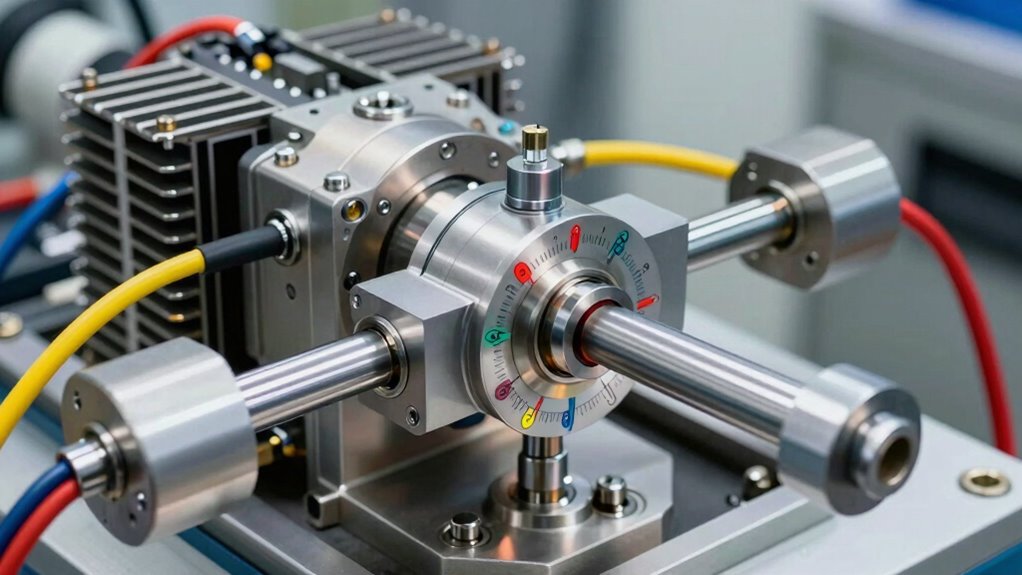
The pod design incorporates mechanical locking mechanisms that secure vehicles without traditional strapping systems. Rail-mounted pods slide into fixed positions, while integrated eddy current brake systems provide controlled resistance.
Shock absorbers within each pod manage vibration and vehicle camber angles, ensuring consistent contact throughout testing.
This engineering approach eliminates variables created by wheel activity and tyre spin, allowing operators to work with confidence.
Fixed floor-mounted systems provide stable reference points for accurate power measurement while reducing equipment-related injury risks from unexpected vehicle movement during testing procedures.
Why High-Horsepower Workshops Are Switching to Hub Dynos
The automotive dynamometer market is experiencing significant growth, with the hub dyno segment expanding faster than traditional roller-based systems, particularly in shops handling extreme power outputs.
High HP performance demands necessitate safety innovations that traditional equipment cannot provide.
Aftermarket service providers, growing at 6.66% CAGR, recognise hub dynos as essential for their operations:
- Safe testing of extreme power exceeding 5,000 horsepower without traditional roller risks
- Precise measurement capabilities that validate real-world performance against manufacturer claims
- Flexibility and ease of use optimising operational efficiency
- Cost-effective solutions balancing capability with profitability
High-horsepower shops are shifting to hub systems because they deliver accurate torque and power data while maintaining operator safety.
This change reflects industry recognition that extreme power applications require specialised equipment designed specifically for enhanced performance demands and precision validation.
Making the Upgrade: Hub Dyno Setup and What It Takes
Once a shop commits to hub dyno technology, the next phase involves comprehending the practical requirements for installation and operation. Grasping these hub dyno advantages requires examining the concrete steps needed to integrate this equipment into an existing facility.
| Requirement Category |
Specification |
Impact |
| Electrical |
240V, 30A single phase |
Standard shop infrastructure |
| Computer |
Windows 10, Core i5, 8GB RAM |
Minimal IT investment |
| Physical Space |
No pit or anchorage needed |
Flexible shop layouts |
| Installation Time |
Pod alignment and hub connection |
Rapid implementation |
Installation requirements prove straightforward, involving jack removal of wheels, pod connection to hub adapters, and alignment using directional wheels. The dyno pivots on its centre of gravity, requiring no ground anchorage. Three cap screws secure positioning, while the movable 400 kg pods accommodate most workshop spaces. This modular approach eliminates costly facility modifications, allowing shops to upgrade without operational interference.