Buying Guides

Used vs. New Dyno Parts: The Risks & Rewards Analysis
Used dyno equipment saves £25,000—but at what cost? We reveal why calibration matters more than your budget allows.
Mobile Tuning: The Truth About Portable Hub Systems
Traditional dyno rollers have been the industry standard for decades—but they’re measuring the wrong thing. Mobile hub systems bypass friction entirely, capturing what actually matters: real power at your wheels. The cost difference might surprise you, and the choice between renting and buying could make or break your performance budget. Learn which option truly delivers results and why your current testing method might be costing you horsepower.
Why do two different dynamometer systems produce such different power readings on the same vehicle?
The answer lies in measurement methodology. Hub dynos measure power directly at wheel hubs without tyre contact, eliminating rotating mass and friction variables.
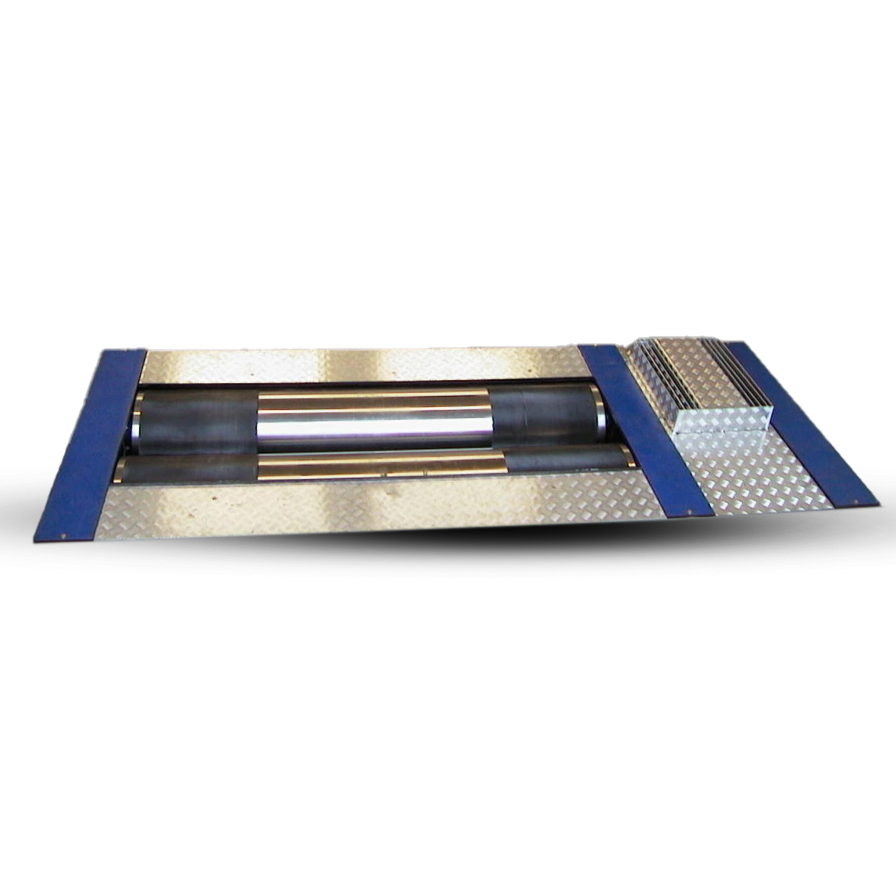
Roller dynos, conversely, measure through tyre contact with rotating rollers, introducing roller dyno friction as a measurement variable that adds approximately 0.25% variance.
A vehicle producing 500 kW engine output might show 400 kW on rollers but 450 kW on hubs due to lower frictional loss.
Hub dyno accuracy excels because tyre variables—mass, age, pressure, and tread depth—no longer impact readings. This direct measurement approach enables detection of minute engine changes and provides more consistent, repeatable data that professionals rely upon for precision tuning decisions. Hub dynos exhibit significantly less inertia, allowing for precise brake control and increased sensitivity to even the smallest variations in engine performance. At Hyper Power Hyperdyno, we leverage cutting-edge software solutions to ensure our hub dynamometer systems deliver the precision and reliability that professionals demand for advanced performance testing.
Roller dynamometers operate under inherent mechanical constraints that introduce unmeasurable variables into testing data, particularly tyre slip and wheel flex, which fluctuate based on vehicle weight transfer and acceleration patterns.
The roller surface itself degrades inconsistently across repeated runs, creating varying friction coefficients that alter baseline measurements without operator visibility or control. X Cut knurl designs can mitigate tyre damage while improving traction and cooling during repeated test cycles.
Load distribution across the roller width shifts fluidly during testing, meaning identical vehicles can produce different results depending on tyre contact patch positioning and pressure distribution.
Most dynamometer testing operates under a fundamental constraint: the equipment measures power and torque while wheels remain fixed against rotating rollers, a controlled environment that bears little resemblance to actual road conditions.
Roller dynos cannot replicate tyre deformation and slip angle variations that occur naturally during acceleration and cornering. When tyres work on real roads, the contact patch deforms laterally, and slip angles develop as the wheel’s direction differs from its heading. Maximum grip is typically achieved when slip angles reach 4-10 degrees, a critical dynamic that roller dynos fail to simulate.
On fixed rollers, this fluid behaviour disappears entirely. Wheel flex, essential to grip generation and load transfer, remains absent from the test. State-of-the-art testing facilities can provide comprehensive data collection across varied conditions, yet even advanced equipment cannot overcome the inherent limitations of stationary roller systems.
Consequently, dyno readings miss critical variables affecting real-world performance, leaving tuners without complete data for optimising vehicle behaviour beyond controlled laboratory settings.
Beyond the limitations of tire slip and wheel flex, dynamometer rollers themselves present another layer of measurement inconsistency that operators must contend with.
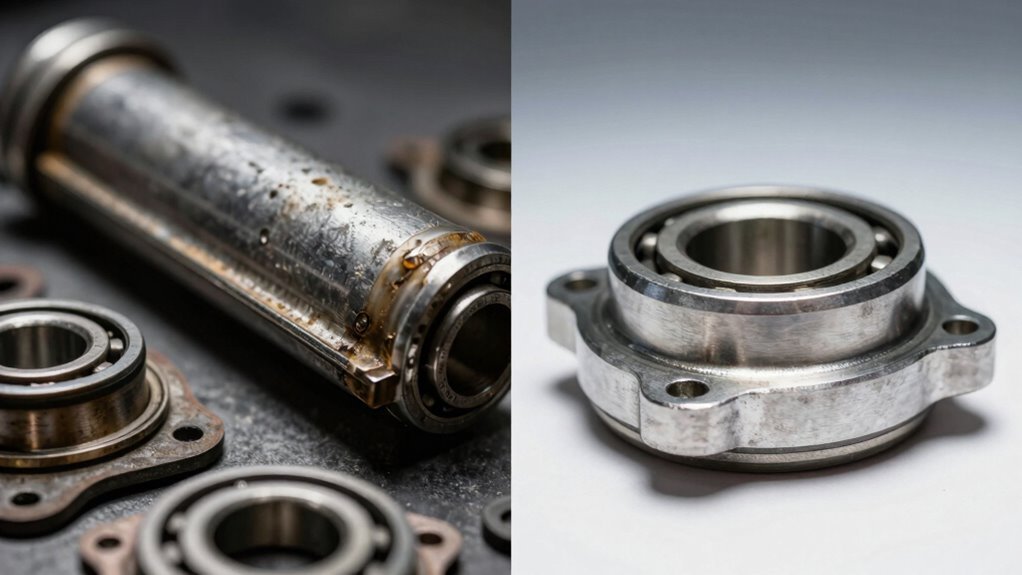
Roller wear develops through multiple mechanisms, including friction factors generated during high-load testing cycles. Surface degradation occurs from abrasive contact with belt materials, contaminants, and repetitive mechanical stress. Misalignment issues compound the problem, creating uneven load distribution across roller surfaces.
Environmental factors—humidity, temperature fluctuations, and chemical exposure—accelerate material deterioration and elasticity loss. As rollers wear unevenly, their geometry becomes compromised, leading to inconsistent contact patterns with test belts. This degradation directly impacts measurement accuracy and repeatability. Regular inspection of roller surfaces can identify early signs of wear before significant damage compromises testing validity.
Professional mobile tuning systems require rigorous maintenance protocols and advanced diagnostic tools to detect roller degradation early and minimise these variables. Understanding roller wear limitations helps technicians establish realistic data benchmarks and maintain confidence in their diagnostic results.
While roller surface wear represents a measurable and manageable concern, load distribution across the dynamometer presents a far more elusive challenge that resists standardisation.
Unlike fixed laboratory setups, mobile systems must contend with sudden, unpredictable shifts in load balancing during operation. When vehicle weight shifts during acceleration or braking, uneven pressure distribution compromises data integrity.
Effective resource allocation becomes critical here. Fluid load balancing algorithms, proven effective in distributed computing environments, require real-time adjustments to maintain accuracy. However, portable hub systems lack the sophisticated sensors and flexible controls necessary for continuous monitoring. Similar to how on-device fine-tuning of large language models must optimise between local device constraints and server-assisted processing, mobile dynamometers struggle to balance computational demands with hardware limitations.
Professional operators recognise this limitation, as precision testing services demand rigorous attention to equipment calibration and environmental factors. Sudden changes in vehicle positioning or weight transfer impair load balance, demanding manual intervention and shifting data reorganisation.
This variability highlights why stationary dynamometers remain the gold standard for precision testing, while mobile systems serve specific, controlled applications.
For automotive professionals evaluating testing solutions, the financial comparison between mobile hub rentals and permanent in-shop dynamometer installations reveals a detailed structure of upfront costs, ongoing expenses, and long-term revenue potential.
Mobile hub rentals range from £250 hourly to £1,800 daily, with combined tuning packages reaching £3,000 per day. In contrast, fixed hub systems demand £60,000 to £120,000 in initial investment, while chassis dynos start at £25,000.
Mobile hub rentals offer flexible hourly and daily rates, while permanent installations require substantial upfront capital investment for long-term revenue potential.
Each vehicle tested generates £1,000 to £3,000 in service revenue. Mobile operations eliminate street testing expenses and insurance costs, making them attractive for facilities prioritising lower capital requirements. Flexible finance terms tailored to project needs can further reduce the financial burden of equipment acquisition for testing operations.
Permanent installations offer higher revenue scaling potential, generating consistent income once established, though requiring substantial upfront commitment and facility space allocation.
The hub dynamometer market features several established brands, with ProHub systems standing out through their direct axle shaft connection methodology that eliminates wheel and tyre variables inherent in traditional roller-based chassis dynamometers.
ProHub’s design connects Power Absorption Modules directly to vehicle hubs, enabling repeatable torque and power measurements across capacities ranging from 2000 to 6000+ horsepower, while competing systems often rely on roller contact that introduces friction variables affecting measurement accuracy.
This fundamental design difference positions hub-based systems like ProHub as precision instruments for serious tuning applications, whereas roller dynamometers remain suitable for general performance assessment but introduce variability that complicates consistent data comparison across multiple test sessions.
Custom dynamometer solutions can further enhance testing capabilities by providing tailored software and advanced integration features designed to meet specific vehicle configurations and research requirements.
Direct hub connection technology represents a fundamental shift in portable dynamometer design, eliminating the variables that traditional wheel-mounted systems cannot control.
ProHub’s precision engineering connects directly to vehicle axle hubs via billet steel adapters, removing wheel and tyre inconsistencies from testing data.
The non-coaxial design accommodates camber and toe variations up to ten degrees in each direction, enabling flexible module positioning.
Twin Constant Velocity joints distribute forces evenly, ensuring repeatable results across multiple power runs.
Heavy-duty floor plates with internal track systems and anti-torque stabilisation devices improve safety during extreme testing.
This direct connection benefits tuners and engineers by providing accurate power measurements, critical for validating performance modifications on 2WD, AWD, and extreme high-power applications exceeding 6000 horsepower.
Advanced diagnostics through real-time performance evaluations during hub dyno testing translate complex metrics into actionable insights for optimisation strategies.
While roller dynamometers have long served as accessible testing platforms for performance shops and tuning facilities, their fundamental design constraints greatly restrict their accuracy and reliability at higher power levels.
Tire performance becomes increasingly problematic as horsepower climbs, with soft compounds and slicks heating rapidly and distorting under load. Beyond 1000 HP, tyre slip becomes excessive, rendering roller dyno challenges nearly unmanageable.
Traction loss directly limits power measurement capability, as all tyres slip slightly—higher horsepower amplifies inconsistent readings. Strapping deforms tyre shape, costing additional energy and lowering results further.
These variables make repeatability nearly impossible for tuning comparisons. Professional certification in dynamometer technology ensures technicians understand these limitations and can select appropriate testing equipment for accurate performance evaluation.
Hub dynos eliminate tyre-related complications entirely, providing consistent, repeatable data regardless of horsepower levels or driving conditions, positioning them as the superior choice for serious performance work.
Several hub dynamometer brands have emerged as leaders in the automotive testing industry, each offering distinct technical capabilities and measurement philosophies.
| Feature | ProHub | Dynapack | Competitor C |
|---|---|---|---|
| Load Cell Type | S Beam | Hydraulic | Standard |
| RPM Stability | Superior (Low Inertia) | Fast Response | Standard |
| Max Power | 6000+ HP | Lower Capacity | Limited |
| Data Channels | 1000+ | Standard | Basic |
| Control Strategy | Feedforward & PID | Direct Engine RPM | Manual |
The hub system advantages become evident through precision measurement capabilities. ProHub’s S Beam load cells guarantee repeatable force and torque measurements, while advanced load control strategies deliver precise, accurate, and responsive performance. Dynapack’s hydraulic systems offer faster response times, though ProHub excels in RPM stability for specialised engines. Professional installation and calibration services ensure that these precision measurement differences directly impact tuning accuracy and data reliability for professional operators seeking competitive advantages in performance optimisation.
How prepared is a vehicle owner when approaching their first mobile dynamometer session? Most arrive with reasonable expectations, though the experience often surpasses initial assumptions. The mobile hub advantages become immediately apparent: convenience, accessibility, and professional-grade diagnostics arrive at the location of choice.
Initial setup involves verifying vehicle compatibility, charging the battery fully, and backing up the stock ECU map. Technicians perform engine health assessments, checking compression and electrical stability beforehand.
The tuning flexibility that mobile systems provide allows operators to adjust parameters on-site, responding to real-time data.
During the first test, dashboard lights may brighten normally—this does not indicate malfunction. Sensor calibrations occur pre-start, with wide-band O2 sensors requiring full warmup for accurate readings.
Post-session, minor fault codes typically clear after short drives, confirming successful optimisation rather than damage.
The choice between fixed speed and fixed torque control fundamentally shapes how a dynamometer responds to a vehicle under test, and selecting the correct mode directly impacts the validity of tuning results.
Fixed speed control maintains constant motor speed despite load variations, adjusting output frequency proportionally to the desired speed while torque automatically balances to meet requirements. Conversely, torque control maintains or adjusts constant torque output, allowing speed variations based on load demands.
Fixed speed control maintains constant motor speed while torque automatically adjusts; torque control maintains constant torque while speed varies with load demands.
For mobile tuning applications, fixed speed proves ideal when stability matters most, ensuring repeatable baseline measurements across different vehicles. Torque control excels when precise force application is required, matching engine power curves during acceleration simulation.
Comprehending these operational differences enables technicians to select the appropriate mode for their specific testing objectives, ultimately providing accurate, defensible tuning data.
Hub dynamometers excel at replicating the precise conditions encountered during competitive driving scenarios, whether simulating the explosive acceleration demands of a quarter-mile launch or the variable terrain challenges of off-road dune running.
Through advanced software integration and real-time load adjustment across individual wheel hubs, operators can programme exact reaction times, throttle responses, and environmental factors that match track conditions with exceptional accuracy.
This capability enables tuners to enhance vehicle performance for specific competitive environments before ever leaving the workshop, eliminating guesswork and ensuring that power modifications translate directly to real-world track success.
Portable hub dynamometer systems bridge the gap between workshop testing and actual track performance by replicating quarter-mile acceleration scenarios with precision and flexibility.
Operators configure customisable reaction time parameters directly through software, enabling reaction time optimisation that matches specific track conditions and driver profiles. This approach eliminates hardware constraints, allowing technicians to simulate various launch delays before actual racing.
Simulation accuracy depends on precise input parameters, including vehicle weight, gearing ratios, and RPM ranges.
Real-time data logging captures shift patterns, converter slippage, and timing curve execution during simulated runs. The system validates two-step timing functionality and transmission engagement before track implementation, identifying potential drivability issues early. Regular software updates enhance the system’s performance and reliability while ensuring full compatibility with your specific dynamometer setup.
This capability guarantees vehicles perform reliably when conditions matter most, altering workshop diagnostics into competitive advantages for professional tuning operations.
When operators need to validate vehicle performance before executing high-stress track runs, hub dynamometer systems offer a controlled environment that replicates real-world acceleration scenarios with exceptional accuracy.
Dune run behaviour presents unique challenges involving variable surface traction that directly impact engine performance and drivetrain response.
Hub dyno systems simulate these demanding conditions through advanced load simulation parameters. Operators input vehicle weight, tyre coefficient data, and aerodynamic specifications to model sand surface behaviour.
The system generates precise traction variables matching actual dune environments, allowing technicians to test tuning adjustments before field execution.
This controlled replication eliminates unpredictable track conditions while maintaining diagnostic accuracy. Engineers extract critical performance data, validate turbo response, and confirm fuel mapping—ensuring vehicles perform reliably during actual dune runs without costly trial-and-error field testing.
One of the most practical advantages of modern dynamometer systems is their ability to accommodate multiple drivetrain configurations during a single testing session, eliminating the need for equipment swaps or facility changes.
Maximising Dyno Efficiency
Standard dyno systems achieve drivetrain compatibility through strategic vehicle positioning and software reconfiguration, not hardware changes. Front-wheel-drive vehicles drive straight onto rollers, while rear-wheel-drive vehicles reverse on. Both secure identically with sturdy straps.
Electronic control modules toggle between AWD and FWD modes via software, enabling sequential testing without physical modifications.
Real Results Across Configurations
A single session captures thorough performance data across all drivetrain types. RPM synchronisation prevents calculation errors when comparing different configurations.
Power pressure variations, torque outputs, and horsepower figures remain consistent and reliable throughout multi-configuration testing, providing the scientific validity professionals demand.
Modern ECU tuning has fundamentally changed with the advent of smartphone-based remote adjustment systems, eliminating the traditional barriers of laptops, complex cables, and stationary workshop setups.
Remote Tuning Capabilities
Smartphone integration enables technicians to adjust vehicle performance parameters directly from mobile devices. The process involves reading ECU data, uploading logs to cloud platforms, and downloading tuned files for immediate implementation.
This remote tuning approach optimises workflows considerably.
Key Advantages:
Professional tuning shops benefit from reduced equipment overhead while maintaining diagnostic precision.
ECU Connect and EcuTek PhoneFlash exemplify this technology, supporting OBD2-compliant vehicles worldwide post-2008.
Smartphone integration democratises access to advanced tuning capabilities.
How does a tuning shop decide between renting portable dynamometer systems, purchasing equipment outright, or collaborating with an established facility?
Renting Benefits and Flexibility
Renting portable hubs reduces upfront costs considerably, allowing shops to test market demand without long-term commitment.
This approach provides access to latest technology updates through provider maintenance, minimising storage logistics.
Seasonal service volumes become manageable through scalability options.
Buying Drawbacks and Ownership
Purchasing equipment requires substantial initial investment but builds equity and eliminates recurring rental fees.
Shops gain customisation freedom and control over maintenance schedules, yet face higher overhead responsibilities.
Partnership Advantages
Collaborating with established shops grants access to existing customer bases, shares operational risks, and utilises combined knowledge.
This model improves competitive positioning while facilitating data sharing for better analytics, creating mutual growth opportunities for community-focused businesses.
Used dyno equipment saves £25,000—but at what cost? We reveal why calibration matters more than your budget allows.

South African workshop owners reject traditional banks. Dyno Finance proves faster funding exists—here’s what changes everything.
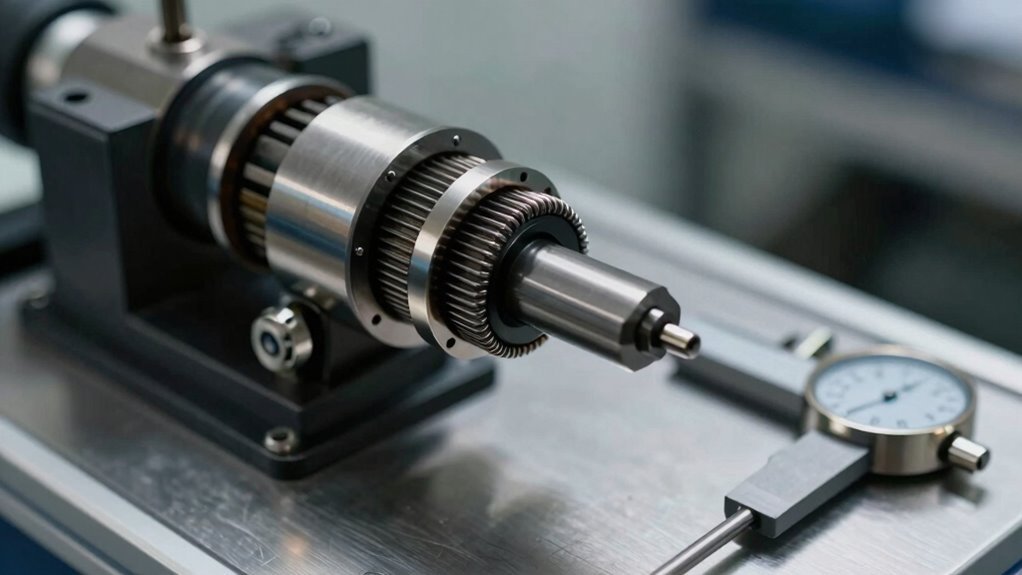
Most technicians miss critical factors that cause speed sensor failures. Learn what separates reliable diagnostics from cascading system problems.
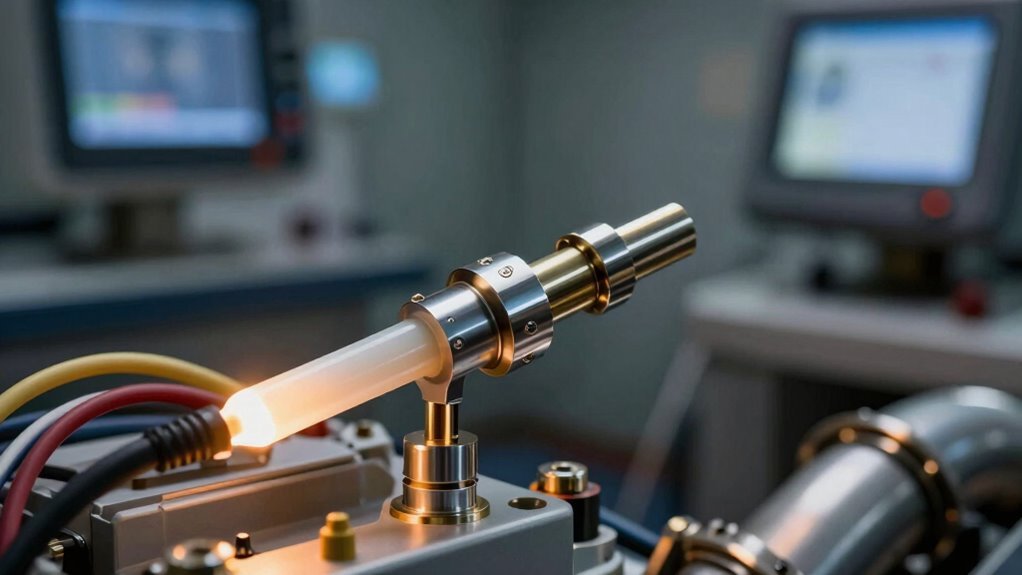
Narrowband sensors are costing you power. Learn why wideband O2 technology separates real tuning from guesswork—and how to implement it correctly.
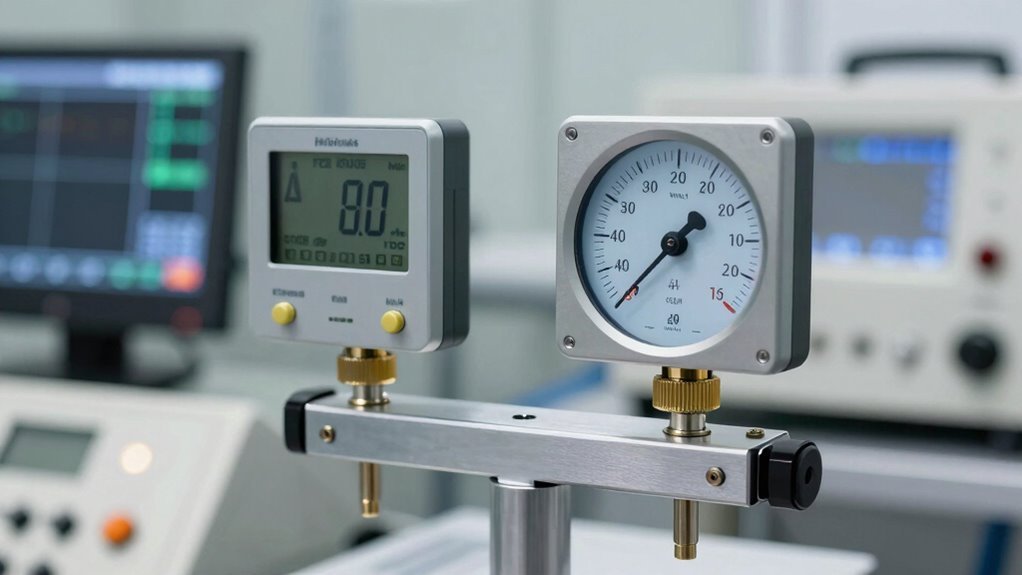
Your dyno numbers are incorrect. Temperature, humidity, and pressure quietly distort every measurement—correction factors reveal what your engine actually produces.

Heavy-duty fleets waste thousands on brake wear. One controller feature changes everything—here’s why most managers miss it.
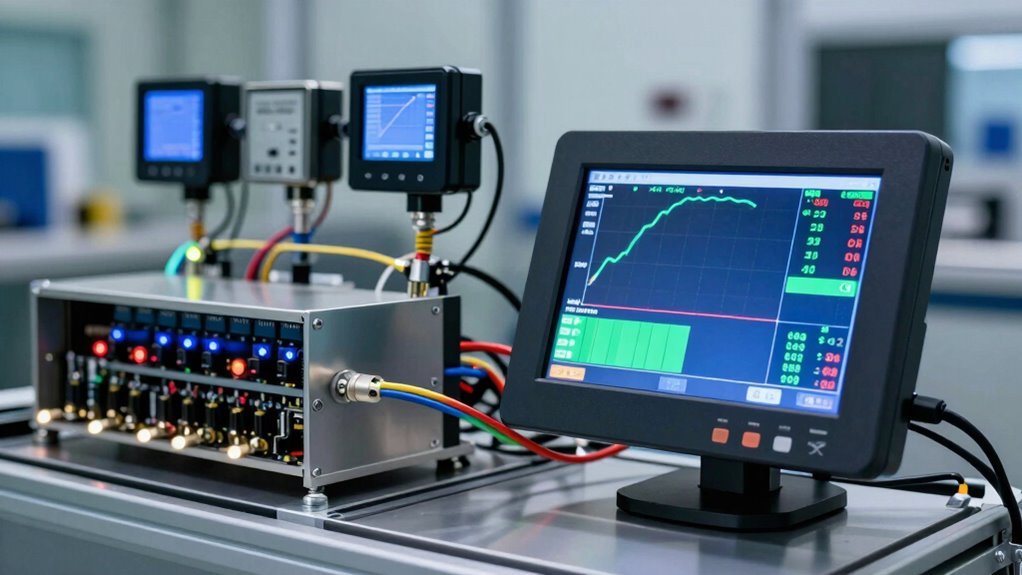
Modern dyno testing exposes a hidden gap between leading DAQ platforms and the rest. What are you missing?

Hyperwin4 rewrites dyno tuning with AI diagnostics and real-time cloud power. But are your devices ready for this shift?