Retarder Controllers: Why Your Fleet’s Braking System Might Be Costing You Thousands
Most fleet managers assume brake wear is inevitable. They’re wrong. Retarder controllers use intelligent sensor systems to automatically manage hydraulic pressure across individual wheels, preventing lock-up and dramatically extending vehicle lifespan. While competitors drain resources through premature brake replacements, sophisticated load monitoring keeps your operational costs ruthlessly low. Discover how this precision technology transforms fleet economics.
Why Retarders Matter: Cost Savings and Brake Life
When operating heavy-duty vehicles over extended distances, the cost of brake maintenance can quickly become a significant line item in fleet budgets.
Retarders address this challenge directly by reducing reliance on friction brakes, thereby extending brake longevity and providing substantial cost reduction.
Electromagnetic retarders operate contactlessly under extreme loads, minimising wear on primary brake systems. This technology preserves braking components that would otherwise experience rapid deterioration, translating to fewer replacement cycles and lower maintenance expenses. Studies demonstrate that retarders can extend brake lining life by three to five times, delivering exceptional value for fleet operators managing multiple vehicles.
Electromagnetic retarders minimise brake wear through contactless operation, reducing component deterioration and replacement cycles for fleet operators.
The financial impact extends beyond parts alone. By integrating retarders with electronic controls, fleet operators improve speed management and prevent brake fade, further reducing service downtime.
Secondary retarders increase torque capacity while maintaining consistent deceleration, ensuring reliable performance across varied driving conditions.
For commercial fleets, these combined benefits create measurable savings in both maintenance costs and operational efficiency throughout vehicle lifecycles.
Hydraulic vs Electric: Choosing the Right System for Your Fleet
While the cost savings from reduced brake wear provide a persuasive financial argument, fleet operators face another critical decision: determining which retarder technology best serves their specific operational needs.
Hydraulic Benefits for Heavy Demands****
Hydraulic retarders deliver superior torque at medium-high speeds, making them ideal for heavy-duty towing and demanding conditions.
These systems achieve 1000 PSI in 0.118 seconds, minimising response lag. However, they require regular oil changes and strong cooling system maintenance, increasing operational complexity and long-term costs. Similar to electric over hydraulic trailer brakes, hydraulic retarders benefit from reduced electrical connections that minimise debris accumulation at critical components. Our comprehensive parts and maintenance kits are designed to support hydraulic system upkeep and optimise performance.
Electric Advantages for Urban Operations****
Electromagnetic retarders provide silent, wear-free operation with minimal maintenance requirements.
They excel on mountainous routes and urban delivery routes, offering progressive braking control. Despite higher initial purchase prices, their lower long-term maintenance costs and reduced electrical system complexity make them economical for stop-and-go operations.
How Sensors Drive Smart Braking Decisions
How do retarder controllers know exactly when and how hard to brake?
The answer lies in continuous sensor monitoring and sophisticated signal processing. Multiple sensors transmit real-time data about vehicle speed, temperature, torque, and braking demand to the central control unit. Proper sensor calibration guarantees signal accuracy, allowing controllers to interpret this information precisely.
Controllers analyse three key factors to determine ideal braking force:
- Vehicle speed and load parameters through advanced algorithms
- Driver input from brake pedal application and throttle position
- System conditions including temperature and operational variables
Electronic controllers translate this sensor data into corresponding electromagnetic field adjustments within the retarder system. The controller continuously monitors the system for abnormalities, activating safety mechanisms if issues are detected to ensure safe braking performance.
Real-time signal processing enables responsive braking force adjustments based on changing driving conditions, guaranteeing reliable performance across diverse fleet operations and driving scenarios.
Getting the Right Braking Force: Load Modulation Explained
Retarder controllers function through a continuous feedback loop where multiple sensors detect real-time vehicle conditions, transmitting data to electronic control units that calculate ideal braking force requirements.
These control units then command proportional valve response systems to adjust hydraulic pressure distribution across all wheels, ensuring braking force matches the instantaneous load conditions rather than relying on fixed mechanical ratios.
This load-based retardation adjustment prevents wheel lock-up on lightly loaded axles while maximising braking efficiency on heavily loaded sections, providing superior stability and stopping performance across varying operational scenarios. The brake force modulators play a critical role in executing these precise adjustments to individual wheel braking force in real time.
Because precise braking force depends on accurate real-time information, electronic retarder controllers rely on a network of strategically positioned sensors that continuously monitor vehicle conditions.
These sensors track critical variables including vehicle speed, temperature, torque, and braking demand, feeding data to the controller for processing.
Effective sensor input validation guarantees signal integrity through diagnostic testing of faulty sensors.
The detection process incorporates:
- Suspension pressure sensors on rear axles measuring load variations
- Body position sensors identifying payload distribution for force adjustment
- Engine and input shaft revolution detectors enabling retarder timing
Sensor calibration maintains accuracy across operating ranges, while multiple ground signals and power outputs support dependable detection. Electronic controllers analyse data from sensors such as speed, brake pressure, and bus load to provide responsive and precise adjustments. Through advanced testing methodologies, the performance of these sensor systems can be validated to ensure optimal braking response under varying operational conditions.
This integrated approach allows controllers to calculate ideal braking force, adjusting application based on real-time vehicle activity and environmental conditions for consistent, predictable performance.
Proportional Valve Response Systems
Achieving precise braking force in modern retarder systems requires a valve that can adjust fluid flow infinitely rather than simply switching between on and off positions. Proportional valve responsiveness enables continuous modulation, responding to electronic signals with exceptional accuracy. The valve’s solenoid receives varying electrical input, positioning the spool to meter fluid flow precisely, providing the exact braking force demanded at any moment. At Hyper Power International, we leverage advanced engineering practices to ensure our retarder controllers deliver optimal performance across all testing scenarios.
| Response Type |
Speed Range |
Typical Application |
| Proportional Valves |
5-50 ms |
Retarder load control |
| On/Off Valves |
10-100 ms |
Basic switching |
| Servo Valves |
1-10 ms |
High-precision systems |
Flow regulation through proportional valves operates via DC power up to 350 bar, incorporating manual overrides for operational flexibility. This approach offers superior cycle control compared to conventional on/off systems, enabling smoother deceleration and extended component lifespan across industrial and automotive applications.
Load-Based Retardation Adjustment
Vehicle weight fluctuates dramatically—a distribution truck might operate at full capacity one moment and nearly empty the next—yet the braking force applied must remain consistent and safe regardless of these changes.
Load adjustment systems detect vehicle weight through suspension and axle sensors, then proportionally modulate retardation force to match actual gross vehicle weight rating.
This intelligent approach delivers several critical advantages:
- Prevents over-braking on light loads by regulating electromagnetic field strength
- Maintains consistent deceleration across varying cargo weights
- Integrates transmission data for real-time load calculation
Modern retarder controllers achieve superior braking efficiency by scaling power absorption to absorbed braking weight.
Heavy vehicles particularly benefit, as retarders reduce service brake maintenance, minimise overheating, and extend friction brake life considerably.
Drivers experience smoother, more predictable stopping power across all operating conditions.
Auto Engagement: Grades and Stop-Go Traffic
Modern retarder systems have evolved beyond manual operation, now incorporating intelligent automation that responds to real-world driving scenarios.
Downhill grade detection systems continuously monitor terrain and vehicle characteristics, automatically engaging the retarder to maintain safe speeds without driver intervention.
Meanwhile, stop-go traffic automation activates retarding force during deceleration phases to provide smoother, more controlled braking.
These technologies work in concert with traditional braking systems, reducing wear and enhancing safety across diverse driving conditions.
Downhill Grade Detection Systems
Since gravity pulls heavy lorries downhill faster than drivers can safely control them, mechanised detection systems now intervene before dangerous speeds develop.
Grade detection technology represents a critical safety improvement in modern trucking infrastructure.
How Detection Systems Work
In-motion weigh stations positioned at hilltops measure gross vehicle weight and axle configuration. These systems automatically engage when lorries exceed the 40,000-pound threshold, calculating safe descent speeds based on road steepness and vehicle specifics.
Key Safety Features
- Real-time weight measurement triggers customised speed warnings
- Adaptive signage displays safe speeds matched to individual lorry characteristics
- Downhill detectors verify speed compliance post-warning exposure
Deployed on mountainous highways near Denver since 1998, these grade detection systems have considerably reduced dangerous descent speeds.
Driver response data confirms that 95 per cent of exposed operators endorse the technology, demonstrating strong industry acceptance of mechanised safety interventions.
Stop-Go Traffic Automation
While downhill grade detection systems address the challenges of mountainous terrain, urban and suburban roadways face a different set of congestion problems that demand equally sophisticated solutions.
Stop-go traffic management utilises advanced traffic signal coordination to optimise vehicle movement through congested zones. The system monitors real-time conditions, enabling automatic vehicle response that reduces unnecessary stopping and minimises travel delays. Radar and camera sensors detect leading vehicle positions and speed, while infrastructure inputs communicate signal phases and timing.
Drivers maintain desired speeds using multifunction steering wheel controls, with the system autonomously managing acceleration and braking during heavy traffic. By handling repetitive stop-start cycles, this technology enhances fuel efficiency and reduces driver fatigue.
The four-second debounce period ensures reliable operation, while automatic braking engages during prolonged stops, enhancing safety and comfort throughout congested commutes.
Connecting Your Retarder to GPS and Adaptive Cruise
Retarder systems now communicate seamlessly with vehicle routing and cruise control through the Controller Area Network (CAN) bus, a standardised digital communication platform that links engine, transmission, brake, and auxiliary systems.
This GPS integration enables terrain awareness and predictive engagement, automatically activating retarders as vehicles approach downhill sections mapped through routing data.
Modern retarder controllers deliver intelligent activation through three key capabilities:
- Predictive braking that maximises retarder usage based on real-time topographic data
- Flexible management coordinating cruise control with multiple braking stages
- Automatic Retarder Control maintaining ideal engine performance while reducing service brake wear
The Mechatronic Retarder Control Unit improves cruise maximisation by integrating GPS terrain data with vehicle performance metrics, relieving service brakes by up to 90% and boosting safety across diverse driving conditions. Hyper Power’s advanced diagnostic tools identify optimisation opportunities to ensure your retarder system performs at peak efficiency.
Payload Changes Braking: Load and Suspension Sensing
The intelligence built into modern retarder controllers extends far beyond GPS terrain mapping and cruise control coordination.
These systems actively monitor suspension behaviour, detecting real-time payload shifts that fundamentally change braking requirements. Suspension sensors communicate continuously with retarder ECUs, signalling weight distribution changes across the vehicle frame.
Flexible Load Response
When payload impact increases, retarders automatically intensify braking force proportionally. Hydraulic systems adjust oil admission through pneumatic valves, while electromagnetic retarders modulate magnetic fields instantaneously.
This flexible approach prevents wheel lockup on wet surfaces and reduces foundation brake strain considerably.
Integration Benefits
Air suspension systems link directly to retarder controllers, conserving pressure while enhancing friction brakes under heavy loads.
The result is smoother deceleration matching payload conditions, lower driver effort, and extended brake system lifespan. Modern controllers reshape payload management from manual adjustment to intelligent, real-time optimisation.
Retarder Control Reduces Brake Wear on Long Hauls
On steep mountain passes and extended downhill stretches, conventional friction brakes face unyielding punishment that accelerates component degradation and increases maintenance costs for fleet operators.
Advanced retarder brake technology alters this challenge through intelligent load sensing and proportional braking distribution.
Advanced retarder brake technology uses intelligent load sensing and proportional braking distribution to revolutionise fleet performance.
Retarder systems deliver significant wear reduction benefits:
- Up to 60% reduction in brake system wear compared to non-retarder vehicles
- Extended brake life extension factors ranging from 1.3-1.65 for Jacobs retarders
- Labour hour savings of 596 hours per vehicle over operational lifetime
This wear reduction mechanism operates by converting kinetic energy into controlled heat through electromagnetic or hydraulic resistance, allowing service brakes to remain cooler during demanding descents.
Fleet operators realise tangible benefits through decreased replacement frequency, minimised downtime, and improved vehicle availability.
Retarder Control Faults: Diagnosis and Fixes
When retarder systems fail to engage or operate inconsistently, fleet operators face escalating maintenance costs and reduced vehicle reliability during critical downhill operations.
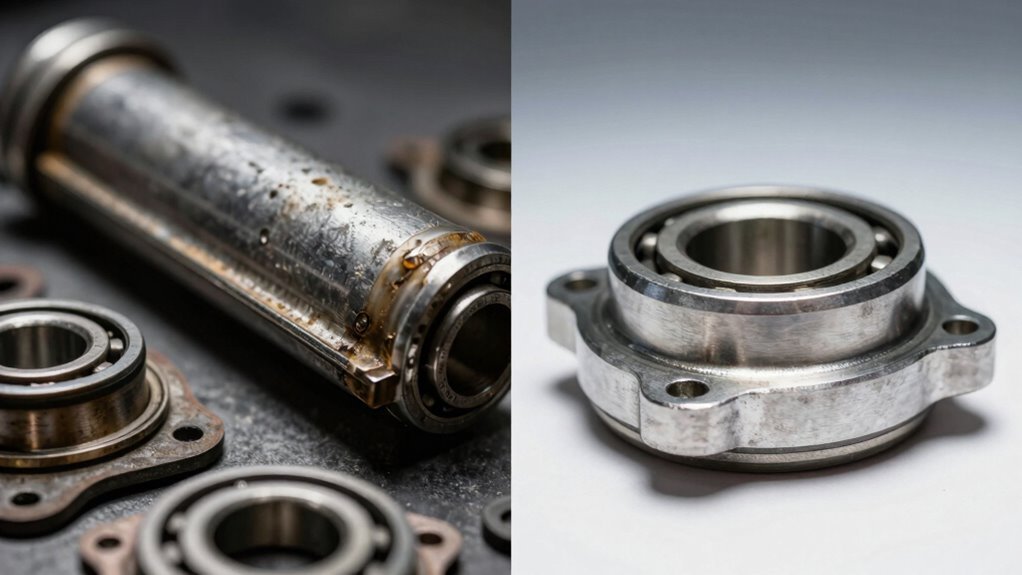
Electrical faults, such as speed sensor damage or signal line open circuits, prevent retarder activation entirely. Mechanical issues like bearing failure or loose flange locking nuts cause abnormal vibration and noise during operation.
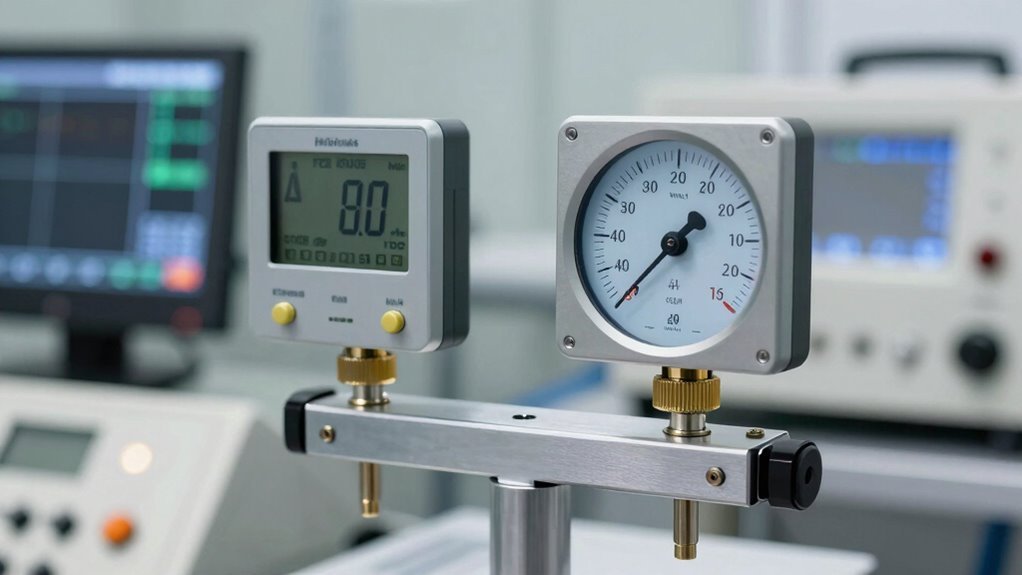
Professional diagnostic techniques systematically identify retarder failure sources. Technicians first eliminate electrical connection faults through vehicle state checks, then employ compressed air pressure testing on oil storage cavities to detect leakage severity.
Real-time pressure comparison against preset values reveals system integrity, while advanced signal-based diagnosis using vibration analysis achieves diagnostic accuracy exceeding ninety-eight per cent.
Targeted repairs—including sensor replacement, cable repair, or vibration damping pad adjustment—restore ideal retarder performance and brake longevity.