Meta Description:
Most tuning shops assume used dynos are financial suicide. But what if that £15,000 saving costs you precision you can’t afford to lose? New equipment promises reliability, yet budget alternatives might deliver identical results—or expose hidden flaws in your operation. The real answer isn’t about equipment age; it’s about understanding which compromises actually matter for your bottom line.
The Price Gap: Why Used Dynos Cost £10,000–£25,000 Less
When comparing the upfront investment required to enter the dynamometer market, the difference between new and used equipment presents a persuasive financial reality. Used 2WD dynos typically sell for £20,000, while new models range from £30,000–£45,000, creating substantial savings through market trends favouring depreciation.
Used 2WD dynos offer £10,000–£25,000 savings compared to new models, presenting compelling financial advantages for market entry.
Motorcycle dynos show similar patterns, with used units priced £15,000–£20,000 below new fully equipped models.
This price gap reflects several factors influencing buyer considerations. Sturdy hardware longevity means used dynos retain functionality after 8+ years of service. Purchasing second-hand dynos can reduce entry costs while maintaining reliable performance for your operation.
Absence of installation costs, warranty implications, and modern technology advancements further reduce used pricing. Lower operational costs and faster ROI potential make resale strategies attractive for workshops targeting performance metrics improvement without excessive capital expenditure.
Can you upgrade a used dyno for modern tuning?
How feasible is it to breathe new life into an older dynamometer system? Upgrading a used dyno depends on several critical factors.
Software compatibility presents the first hurdle, as older units running Windows XP struggle with modern ECU integration and CAN bus protocols.
Brake integration requires careful evaluation—newer eddy current brakes may demand controller replacement if incompatible with existing systems.
Data acquisition capabilities matter greatly for advanced tuning work; first-generation dynos lack multi-channel inputs needed for simultaneous air/fuel ratio and lambda sensor logging.
Roller weight directly impacts handling modern vehicle loads and traction control scenarios. Aged dynos can remain serviceable for 15+ years with proper maintenance, though upgrading components may still be necessary for contemporary applications.
While hardware construction typically supports upgrades, the combined costs of software reactivation fees, brake replacement, and improved data systems can narrow the financial advantage of purchasing used equipment. Our cutting-edge software solutions ensure your dynamometer stays current with the latest performance testing requirements.
Used 4WD Dynos: Modular vs Non-Modular Designs
The decision to upgrade an existing dyno or purchase used equipment hinges not just on software and brake compatibility, but on a more fundamental design choice: whether the system employs modular or non-modular design principles.
Modular benefits shine when operators need flexibility. Used 4WD dynos built on modular frameworks allow technicians to swap components—sensors, retarders, software platforms—without replacing entire systems. This approach extends equipment lifespan and reduces long-term costs remarkably. Modern vehicle engineering, exemplified by complete redesigns like the 2021 Isuzu D-Max with significant structural improvements, demonstrates how strategic component upgrades enhance overall system performance and durability. Accessories designed for specific dynamometer models ensure seamless integration and optimal functionality across different equipment configurations.
Modular 4WD dynos enable technicians to swap components freely, extending equipment lifespan while reducing long-term costs remarkably.
Non-modular drawbacks emerge quickly. Older, monolithic designs lock users into outdated specifications, making upgrades expensive or impossible. These systems resist modern tuning protocols and sensor integration, limiting functionality for contemporary workshops.
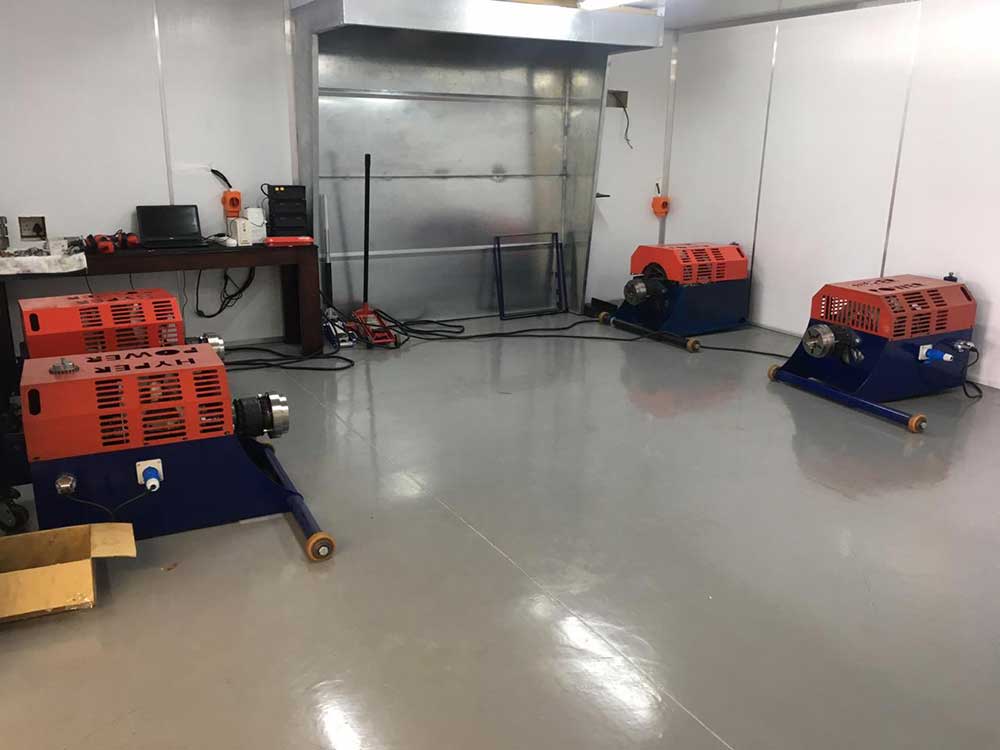
Industry leaders like Hyper Power prioritise modular construction specifically to address this challenge, ensuring used equipment remains versatile across advancing automotive technologies and client needs.
Assessing Roller Surface: Knurling, Wear Patterns, and Upgrade Limits
Roller condition serves as a critical indicator of dynamometer performance and testing accuracy, directly influencing whether a used dyno can deliver reliable results or requires substantial refurbishment.
Wear Assessment Fundamentals
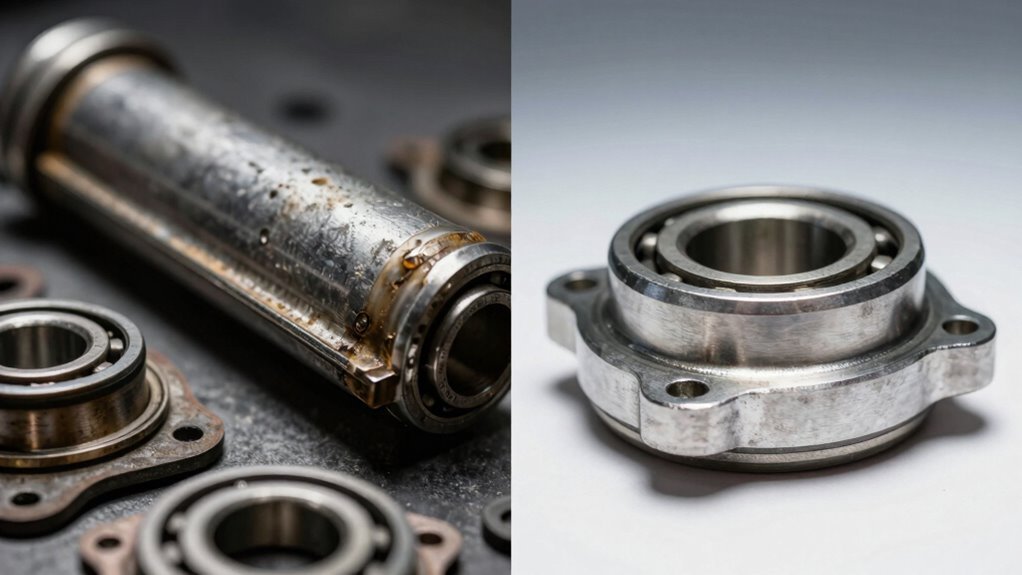
Roller maintenance demands systematic inspection protocols. Dirt, rubber, and debris accumulate on surfaces, obscuring true wear patterns.
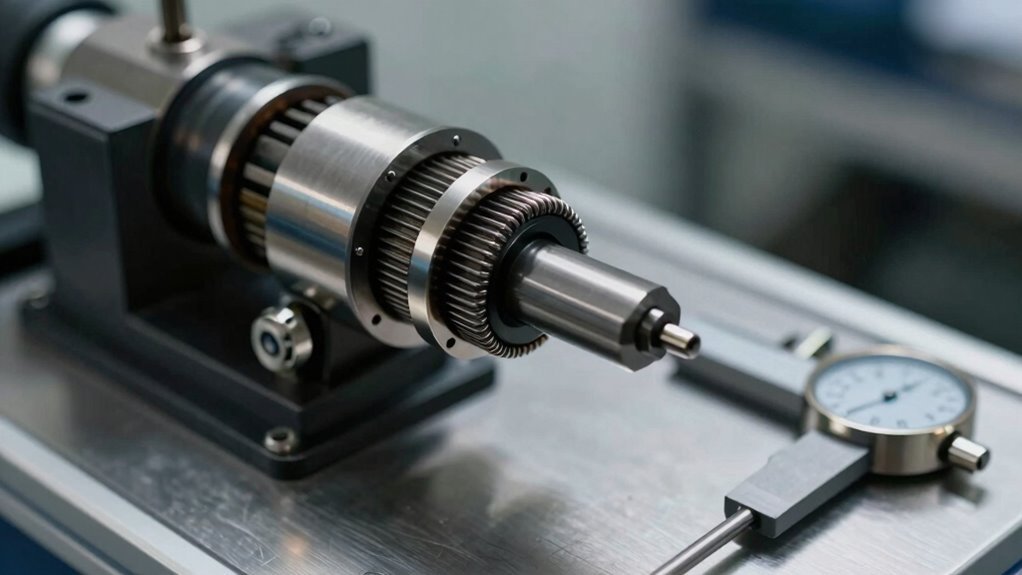
Professional technicians clean rollers thoroughly before evaluation, marking reference points at 150 mm intervals for precise measurement. Indicator accuracy of ±0.025 mm ensures measurements capture even minimal deviations in roller geometry during this assessment phase. Implementing advanced testing methodologies throughout the assessment process strengthens the reliability of wear evaluations and performance predictions.
Key Assessment Areas:
- Knurling depth reduction from repeated use, decreasing tyre grip and increasing slippage during testing cycles.
- Runout measurements exceeding 0.254 mm tolerance, indicating irregularities that compromise load simulation accuracy.
- Tyre distortion patterns that intensify with worn roller diameters, affecting repeatable test results.
Used rollers frequently require resurfacing or replacement.
Upgrade limitations exist—larger rollers increase inertia and demand recalibration.
Professionals evaluate whether refurbishment justifies costs compared to new equipment investment.
Reading Accuracy: Why Used Dynos Show Different Power Numbers
The condition of roller surfaces directly influences how accurately a dynamometer captures power readings, with worn knurling patterns and accumulated debris creating friction inconsistencies that produce inflated or deflated horsepower numbers on used equipment.
Different dynamometer brands employ proprietary calibration systems that, when combined with ageing rollers, generate measurement variances that make direct comparisons between used and new systems unreliable without proper adjustment protocols. Our real-time performance evaluations can identify these variances before they compromise your testing outcomes.
Friction loss calculations become increasingly unpredictable on used dynos as roller wear accumulates, causing the equipment to either mask true engine output or artificially amplify power figures depending on the severity of surface degradation. Since horsepower is calculated, not directly measured, the mathematical foundation of these readings depends heavily on consistent baseline conditions that used equipment cannot reliably maintain across multiple testing sessions.
Roller Surface Condition Impact
When dynamometer rollers accumulate wear from years of testing, their surfaces undergo progressive degradation that fundamentally alters how power measurements are recorded. The knurling that provides grip gradually wears smooth, reducing traction between tyre and roller. This deterioration creates compounding measurement errors that professionals rely on for accurate tuning decisions.
Surface friction changes dramatically as rollers age. Three critical effects emerge:
- Worn knurling loses grip consistency, causing tyre slip that mimics drivetrain losses.
- Pitting and surface degradation introduce measurement noise across repeated test runs.
- Uneven topography forces tyres to deform unpredictably, consuming unreported power.
New rollers maintain consistent contact patch characteristics, providing reliable baseline readings. Used equipment introduces variables that inflate or deflate power numbers unpredictably.
Professional workshops recognise this distinction, realising that roller wear directly undermines data repeatability and tuning precision. Hyper Power International’s advanced engineering practices ensure their dynamometer systems maintain the precision necessary for accurate performance testing across all vehicle types.
Brand-Specific Calibration Variance
Beyond the physical wear affecting roller performance lies a deeper layer of measurement inconsistency rooted in how different dynamometer brands calibrate their systems.
Identical model dynos can produce vastly different readings—variations reaching 13 horsepower and 13 torque under similar testing conditions, even when new. These discrepancies stem from brand-specific calibration procedures that amplify measurement variance.
Used dynos compound this challenge considerably. Previous operators may have introduced calibration drift through tuning precision adjustments, leaving accumulated inconsistencies embedded in the equipment’s baseline settings.
Without standardised recalibration protocols, acquired used dynos retain these unstandardised calibration baselines from prior installations. Hyper Power’s advanced diagnostic tools can identify these calibration discrepancies and restore measurement accuracy in previously owned equipment.
Understanding these variances proves essential when selecting equipment. New dynos offer consistent, manufacturer-certified baselines, while used units demand thorough recalibration verification to guarantee reliable, repeatable power measurements across testing sessions.
Friction Loss Measurement Differences
Significant variations in power readings between dynamometer systems stem fundamentally from how each platform measures and accounts for friction losses, particularly on roller-based equipment.
Roller dynos experience substantial friction variability across speed ranges. Consider these critical measurement factors:
- Speed-dependent friction scaling – losses increase nonlinearly from 10 kW at 50 kph to 100 kW at 200 kph on roller systems.
- Tyre condition impact – age, pressure, tread depth, and flat spots directly alter frictional loss magnitude and accuracy.
- Hub dyno advantages – measuring 5 kW at 10 kph versus 50 kW at 200 kph provides superior measurement accuracy compared to roller counterparts.
Used equipment often exhibits compounded friction variability through worn rollers and degraded sensors.
A 500 kW engine produces 400 kW on aged roller dynos but 450 kW on hub systems, demonstrating the critical importance of comprehending friction loss measurement differences when evaluating equipment reliability and reading consistency.
Rebuild or Buy New: When Refurbishment Makes Economic Sense
For vehicle owners and workshop operators facing a failed transmission or engine, the decision between rebuilding, remanufacturing, or purchasing new components hinges on practical economics rather than sentiment.
Rebuilds offer initial cost savings, ranging from £2,500–£4,000 for transmissions, making them attractive for budget-conscious shops. However, refurbishment benefits diminish when considering longevity. Second failures often exceed new replacement costs, undermining initial savings.
Remanufactured units, priced £4,000–£8,000, justify their higher upfront investment through superior reliability and extensive warranties spanning multiple years with unlimited mileage.
These economic considerations reveal that remanufactured components reduce repeat failures, fundamentally lowering total ownership costs. Professionals who pursue dynamometer certification gain the expertise to accurately diagnose component failures and recommend the most cost-effective solutions for their customers.
Core refunds can negotiate remanufactured prices down by 75%, closing the gap between options.
For operations prioritising durability and minimal downtime, remanufactured components deliver better long-term value than cheaper rebuilds with shorter lifespans.
How Long Will a Used Dyno Last? Durability & Rebuild Capability
A quality used dynamometer, when properly maintained, can reliably operate for 15 years or longer, making durability a key advantage over frequent replacement cycles.
Modern units equipped with eddy current brakes and sturdy engineering demonstrate repeatable performance for decades, provided cooling systems function correctly and preventive maintenance follows manufacturer specifications.
The rebuild and upgrade capability of established dynamometer platforms allows operators to extend service life considerably, replacing worn components while preserving the mechanical integrity of the core system.
Professional installation and setup service ensures that used dynamometers are properly calibrated and configured to perform at their optimal level from the moment of deployment.
Service life exceeds 15 years
Dynamometer equipment from reputable manufacturers demonstrates extraordinary longevity, with most units providing reliable service well beyond 15 years of operation. This extended service life reflects the foundational importance of longevity factors and maintenance requirements in dyno design and upkeep.
Historical examples highlight this durability:
- Power Test’s original water brake engine dynamometer continues operating at nearly 40 years old, showcasing exceptional mechanical resilience.
- Froude dynamometers routinely exceed 50 years of service due to sturdy construction and durable powder coating with anti-corrosive finishes.
- Mustang MD1750 units provided reliable performance for approximately 8 years before strategic upgrades.
Quality construction, minimal mechanical components, and durable protective finishes create systems capable of decades of dependable operation. Custom dyno solutions with tailored software and advanced integration capabilities further extend equipment lifespan through precise alignment with specific testing requirements and seamless operational performance.
Preventative maintenance determines long-term performance alongside initial manufacturing quality, enabling shops to maximise their equipment investment.
Rebuild and upgrade capability
When a used dynamometer reaches the point where performance degradation becomes noticeable, extensive rebuild services offer a practical pathway to restore it to like-new condition or even improve it beyond original specifications.
Rebuild benefits extend far beyond simple repairs. Qualified technicians perform thorough inspection, cleaning, and reconditioning of all components, replacing worn parts with OEM-equivalent or superior materials. The process includes extensive performance testing for temperatures, leaks, and vibration anomalies.
Upgrade potential distinguishes modern rebuild services. Conversion kits improve older systems, such as updating legacy computer platforms to current technology. Software reconfiguration enables full RPM sweeps and modern sensor integration for electronically controlled units. Robust security measures integrated during rebuilds protect your equipment against cyber threats while maintaining operational integrity.
A one-year warranty backs all rebuilds, supported by over 150 years combined industry knowledge. This investment changes ageing equipment into reliable, capable testing platforms.
Brand Durability & Resale Value: Which Used Dynos Hold Up Best
Because dynamometer equipment represents a considerable capital investment, comprehending which brands maintain their value and reliability over time becomes essential for workshops evaluating used options.
Brand Comparisons and Resale Trends****
Industry data reveals distinct durability patterns across leading manufacturers. Mainline systems demonstrate exceptional longevity, with units operating reliably for three years with minimal maintenance.
Mustang dynos typically exceed 15-year lifespans, while Dynapack’s direct hub design suits long-term development work. Dynojet’s modern generations offer improved reliability compared to earlier models.
Key Resale Factors:
- Roller surface condition—knurled surfaces considerably outperform flat steel
- Sensor compatibility with contemporary software upgrades
- Heavier roller construction supporting future reconditioning
Strategic buyers prioritise machines with documented maintenance histories and serviceable components, ensuring stronger resale value and operational continuity.